About
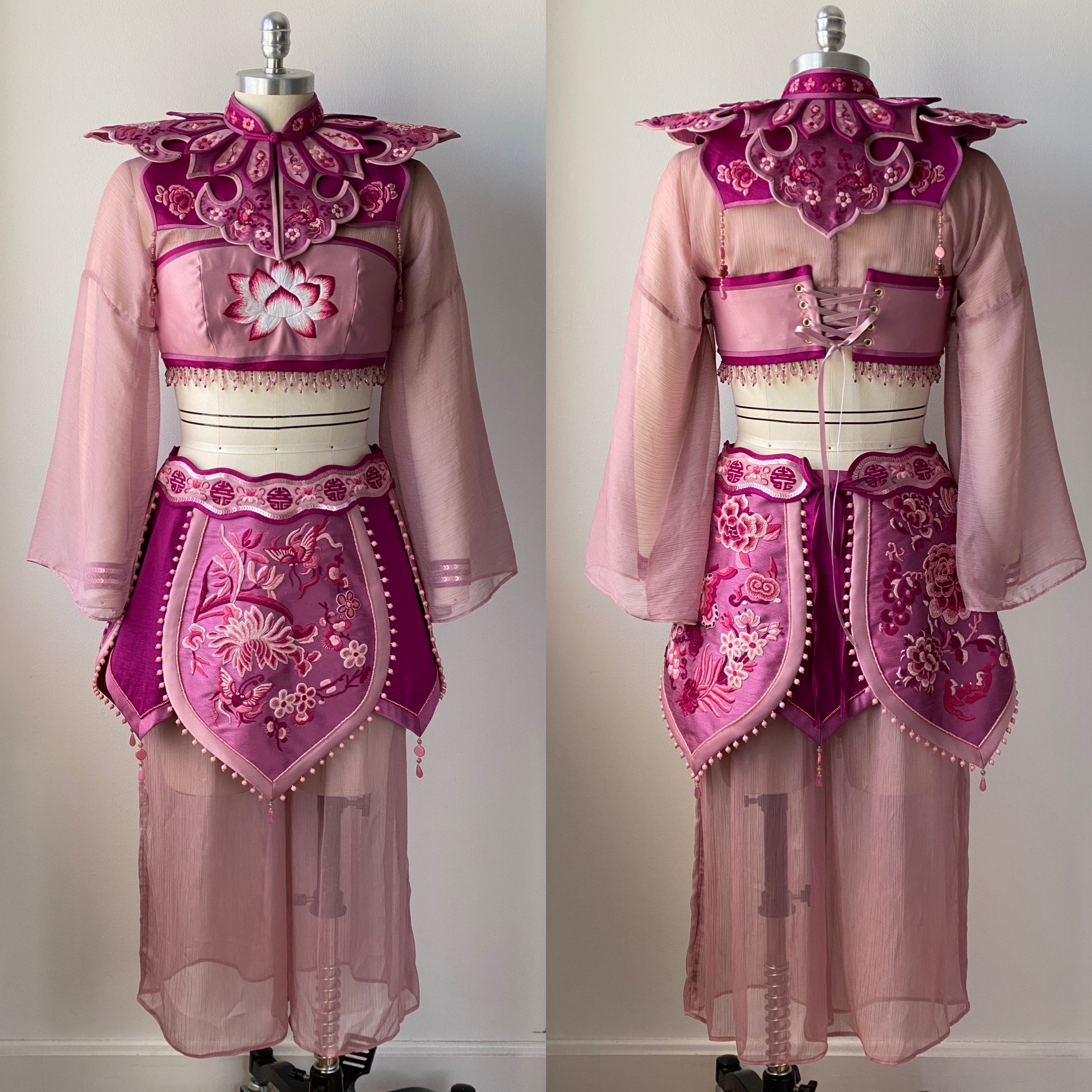
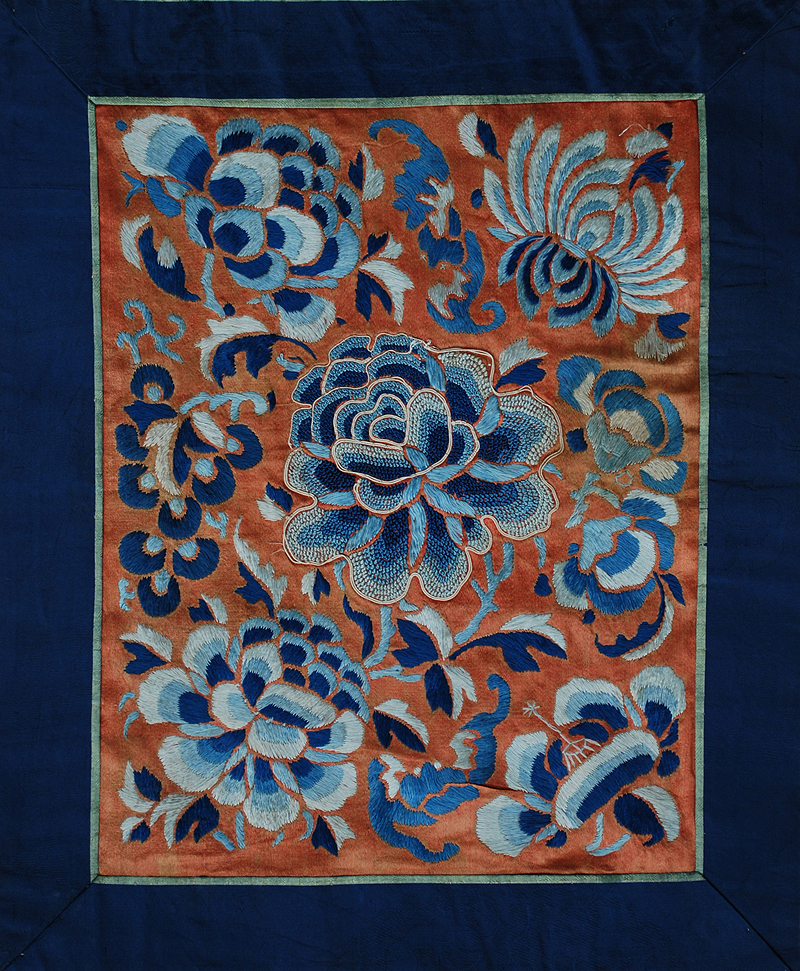
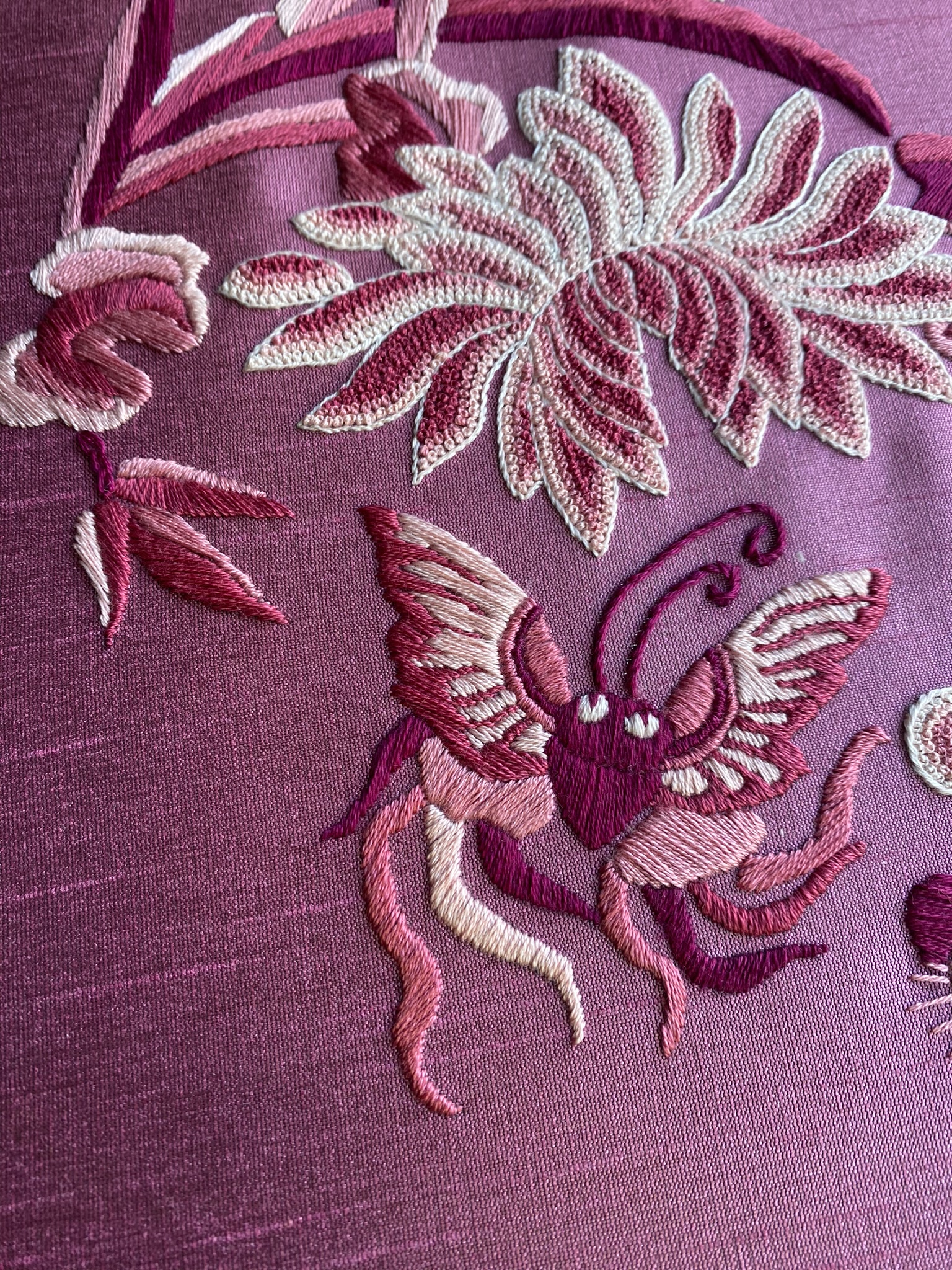
My vision for this cosplay was to create a version of Ty Lee that highlights her identity as a performer by designing a costume that takes inspiration from the elegant and maximalist costumes of Chinese performing arts such as Chinese opera. The highlight of this cosplay is the hand embroidery, the designs for which are directly based on antique Chinese embroidery pieces primarily from the collections of the MFA Boston and the Met.
- Media: Avatar: The Last Airbender (2005)
- Character: Ty Lee
- Year Completed: 2024
- Debut Convention: Anime Boston 2024
Construction
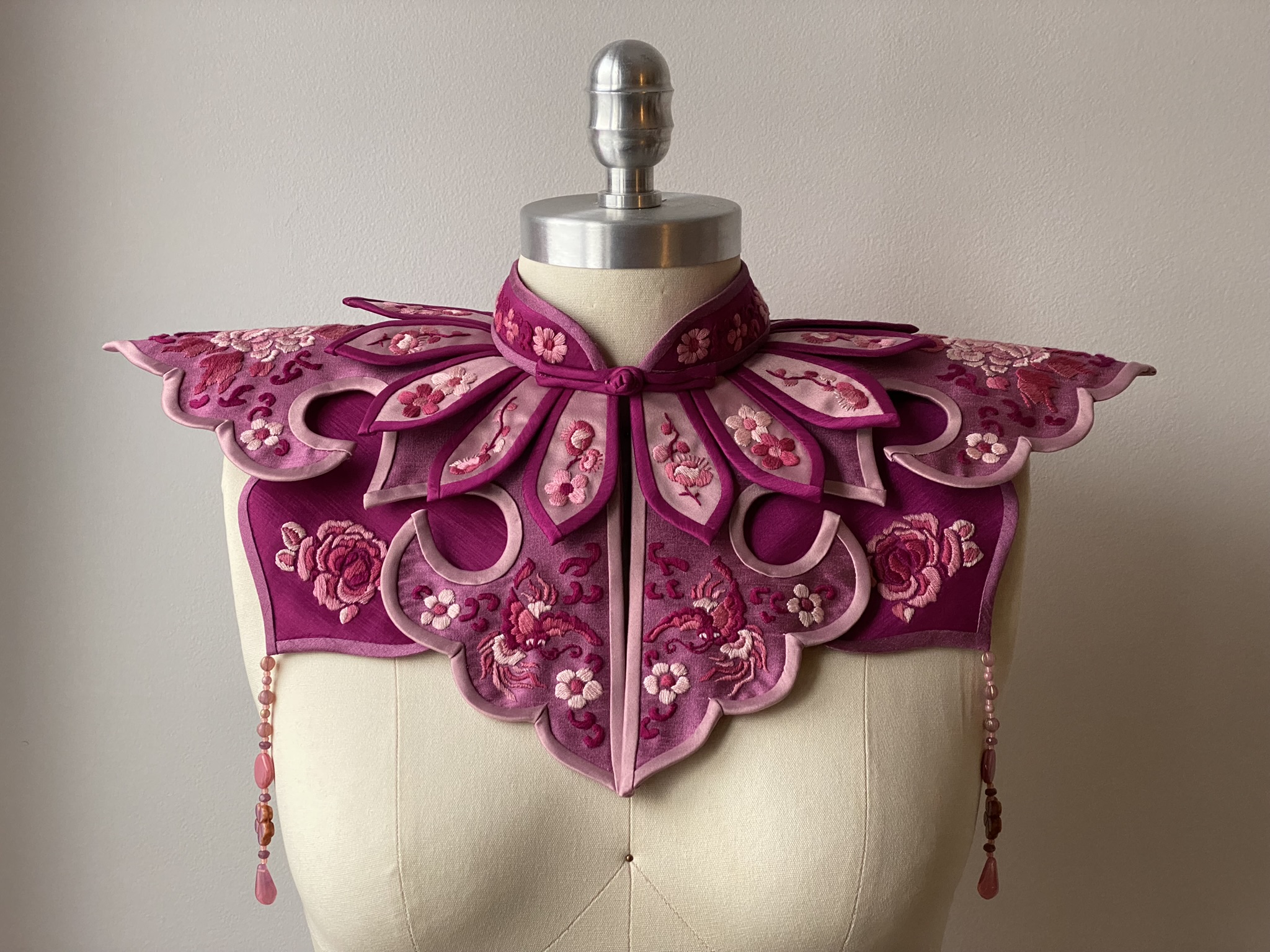
Yunjian Collar
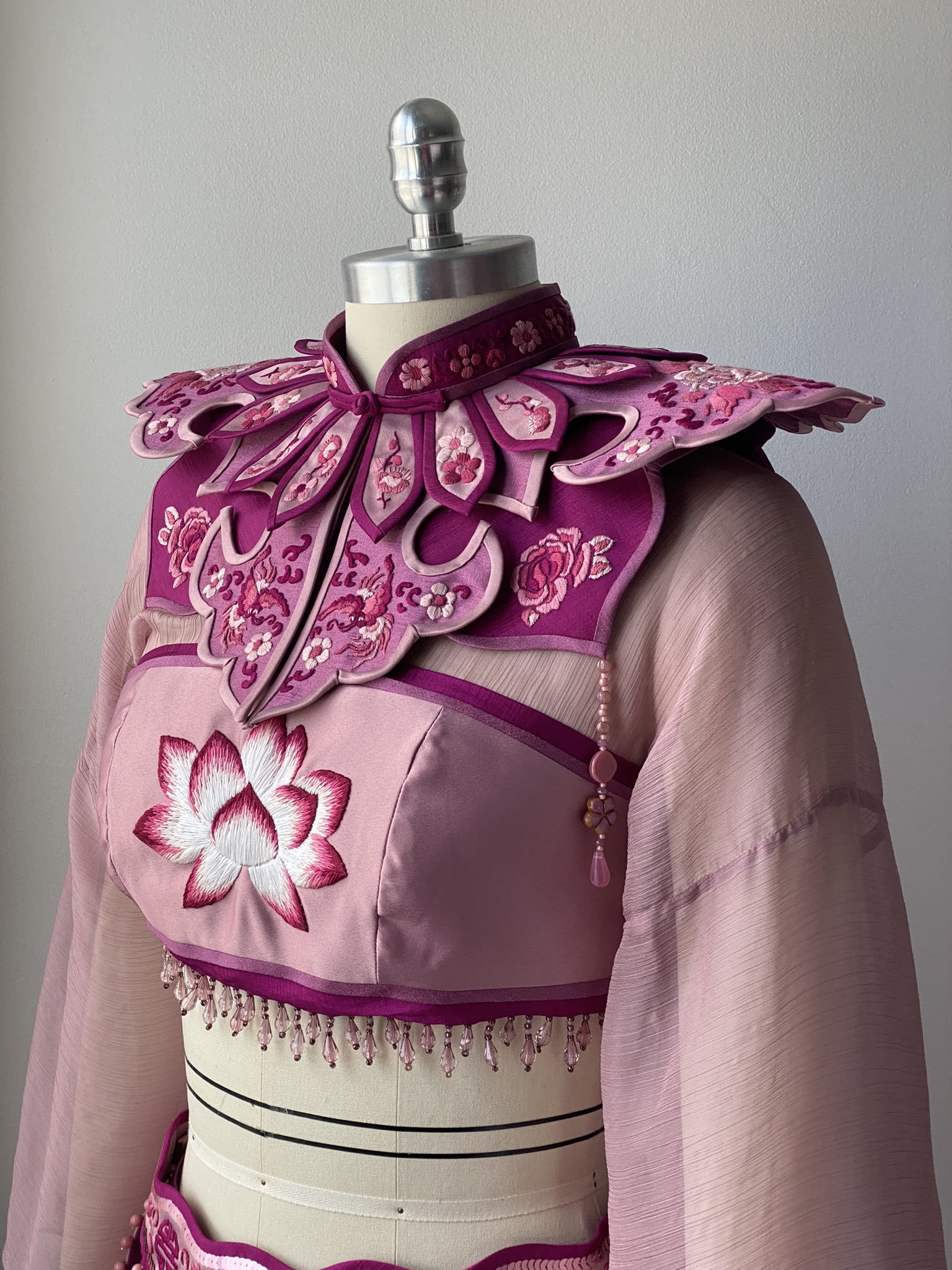
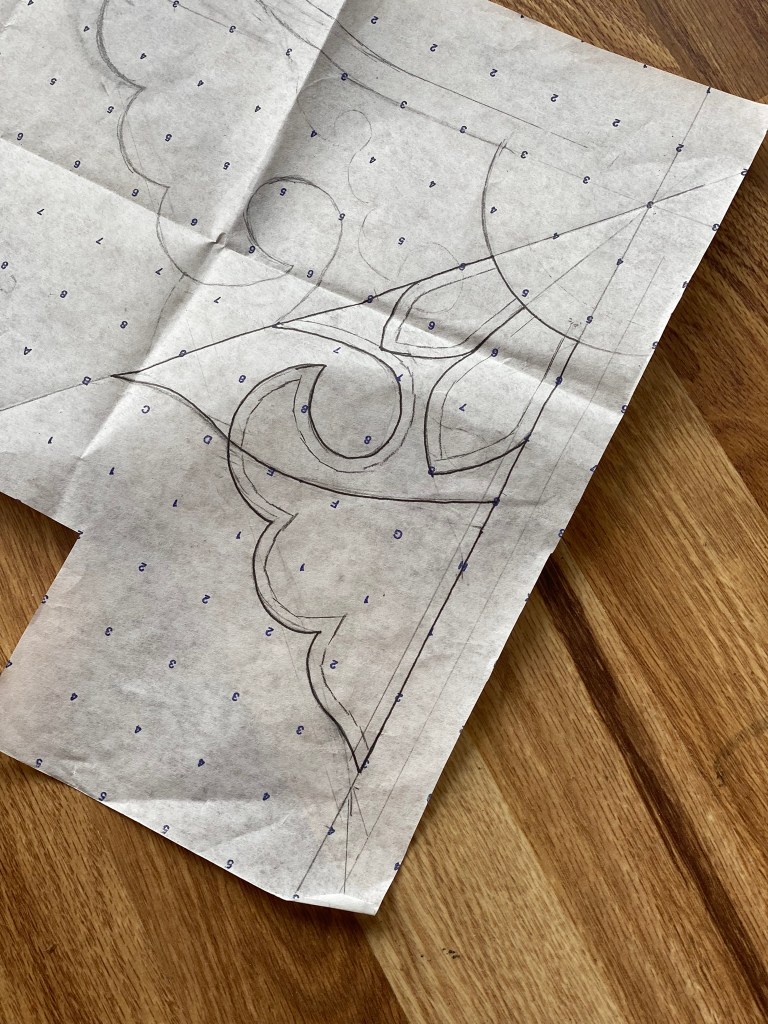
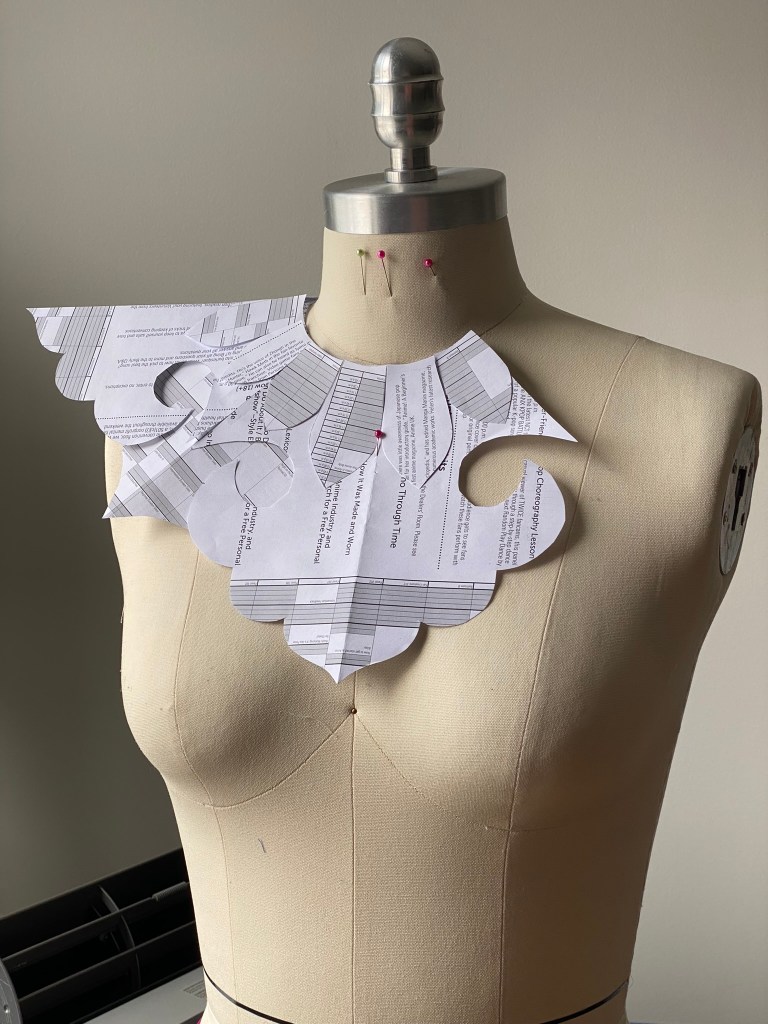
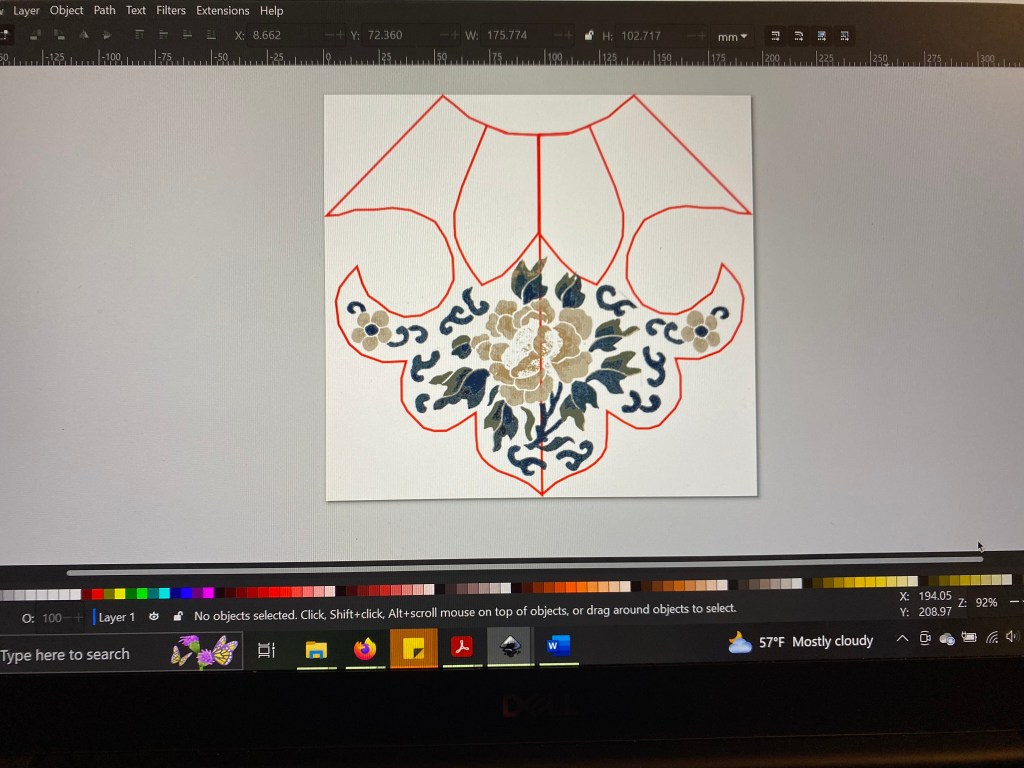
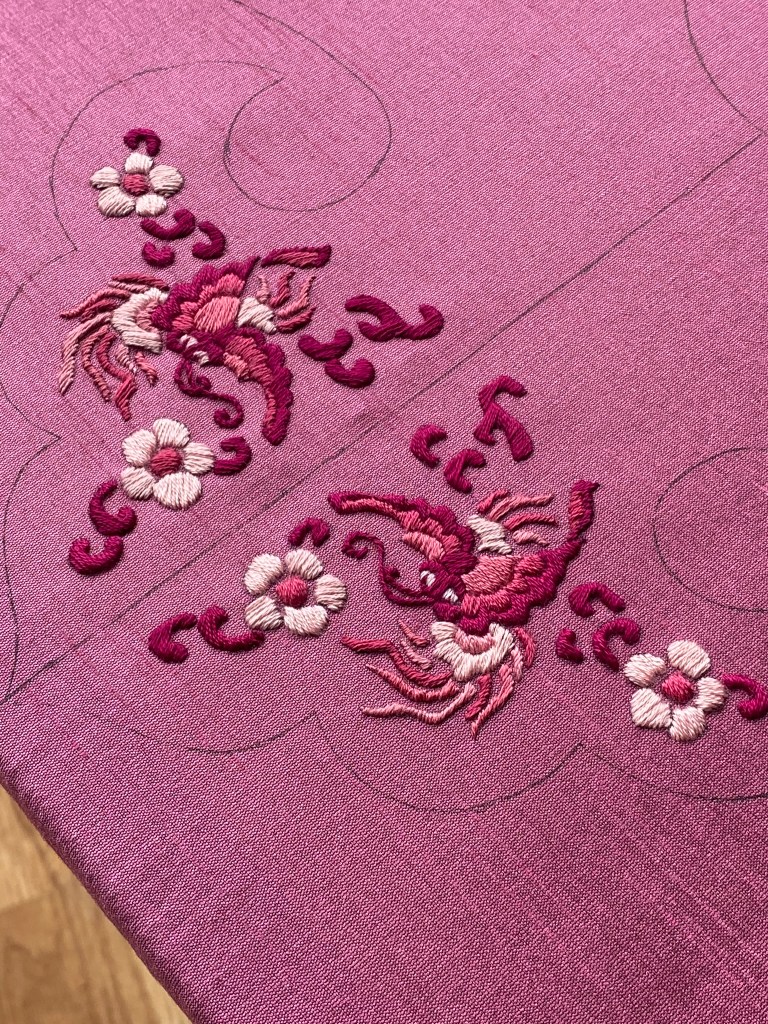
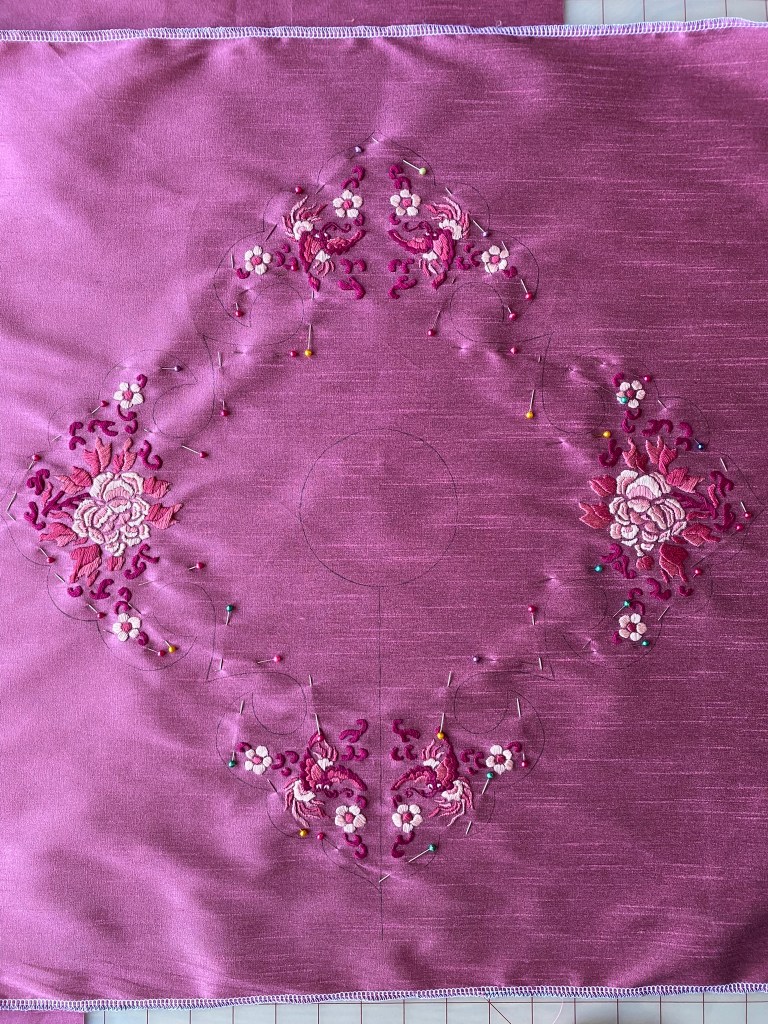
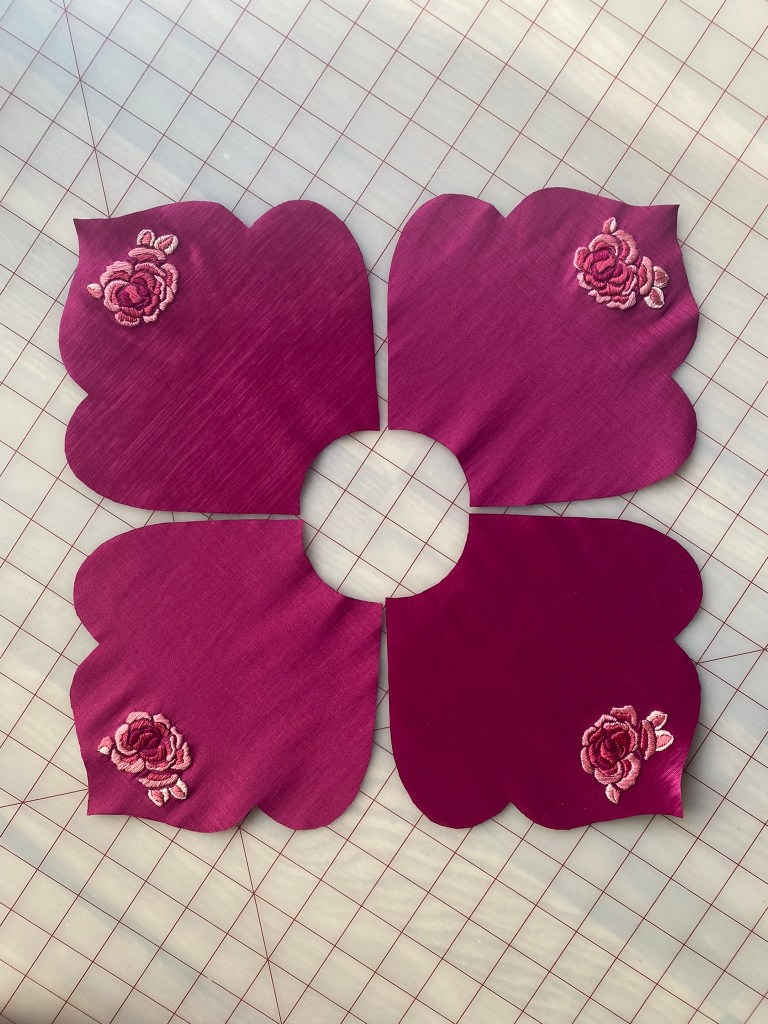
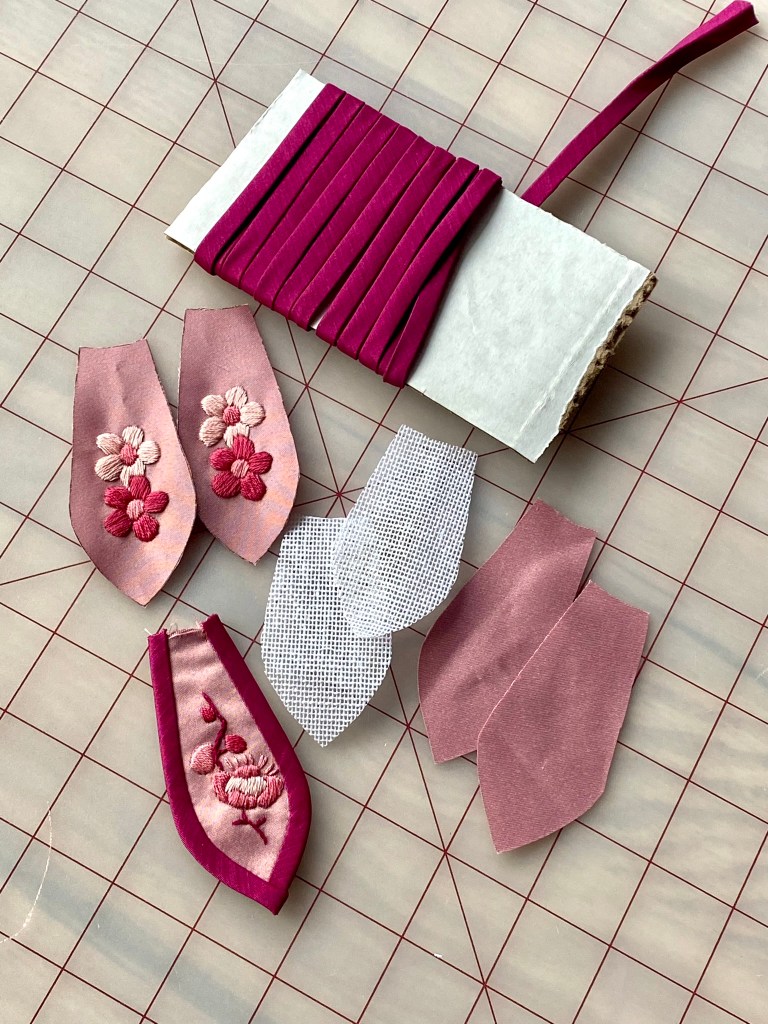
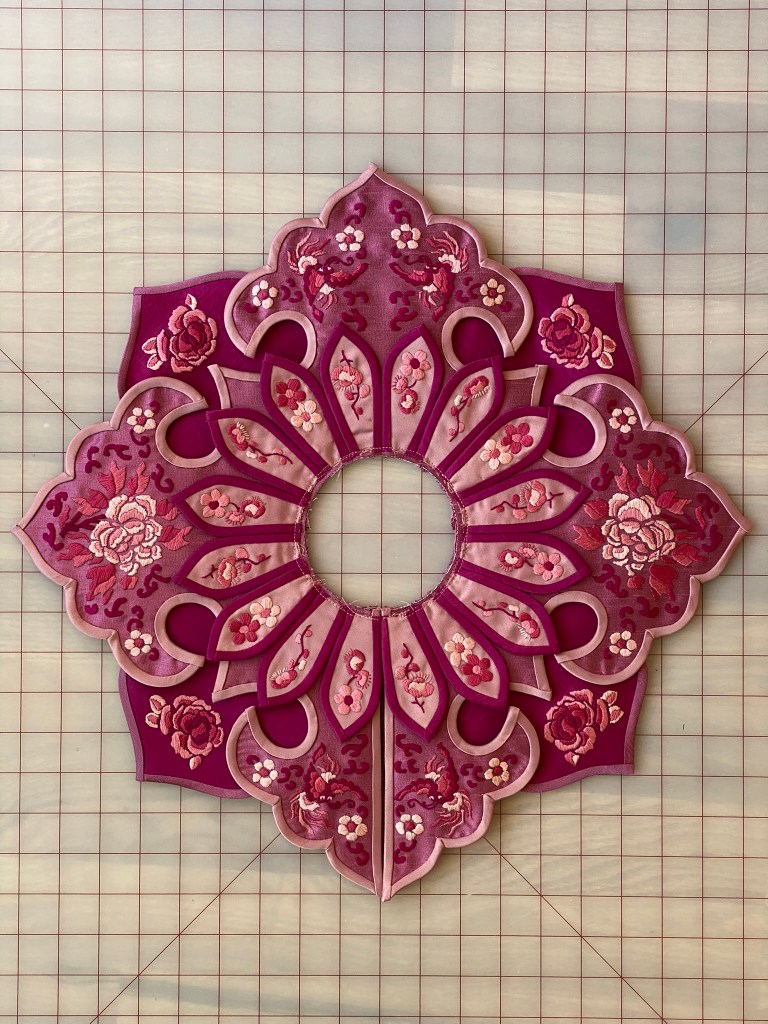
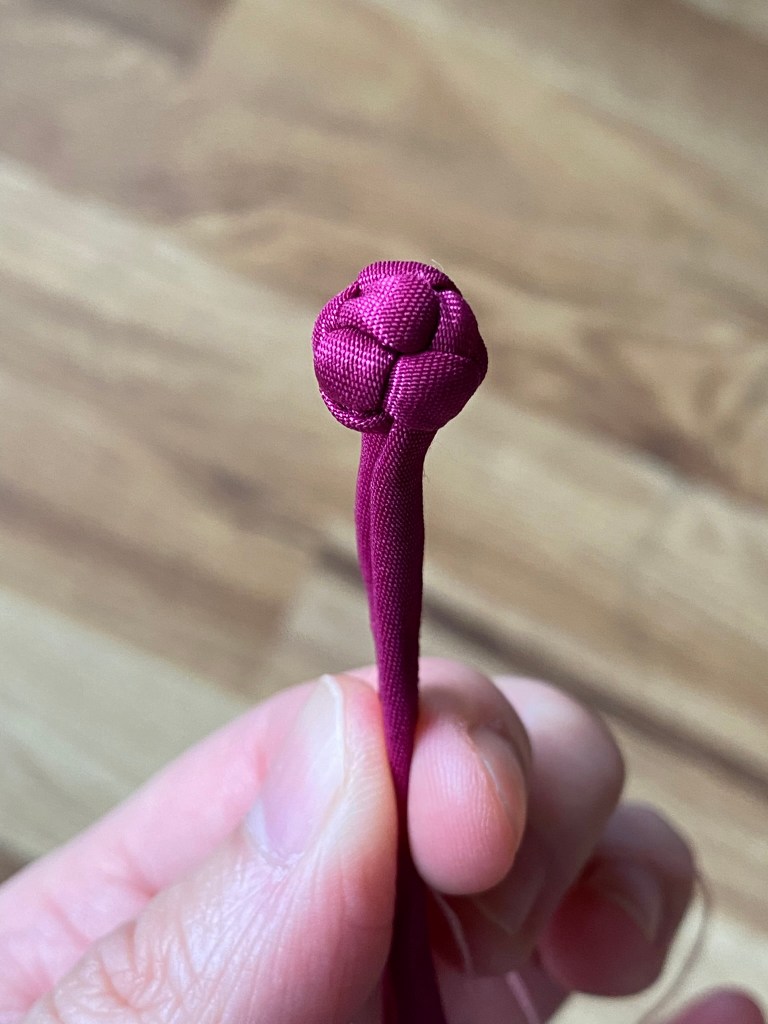
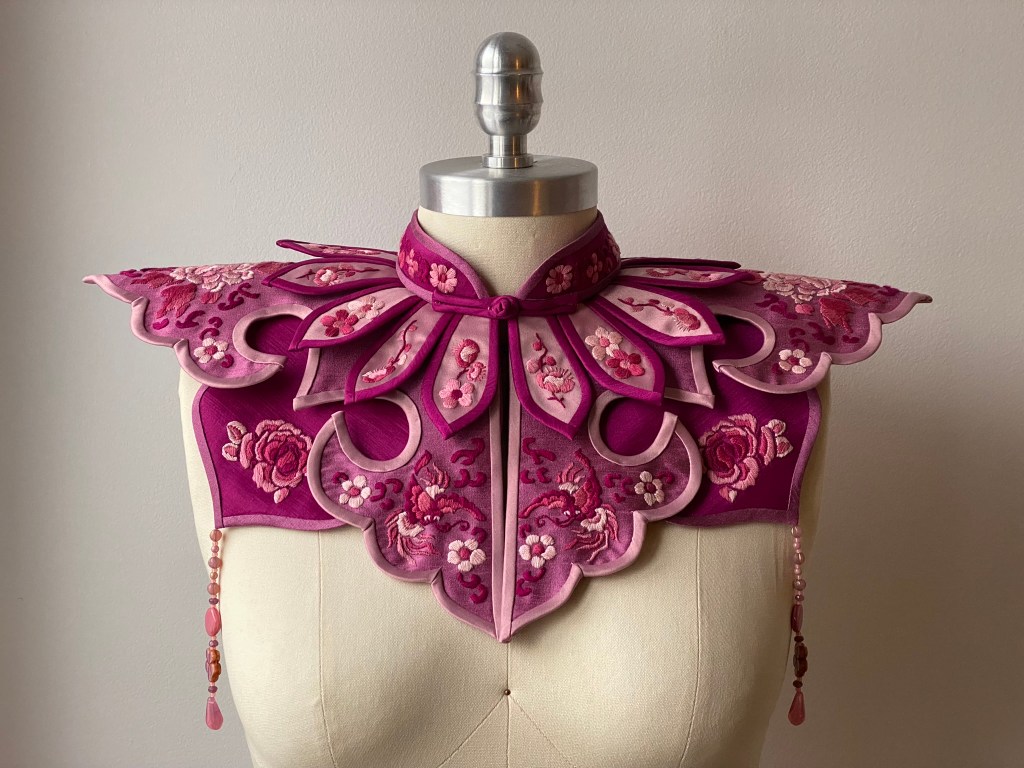
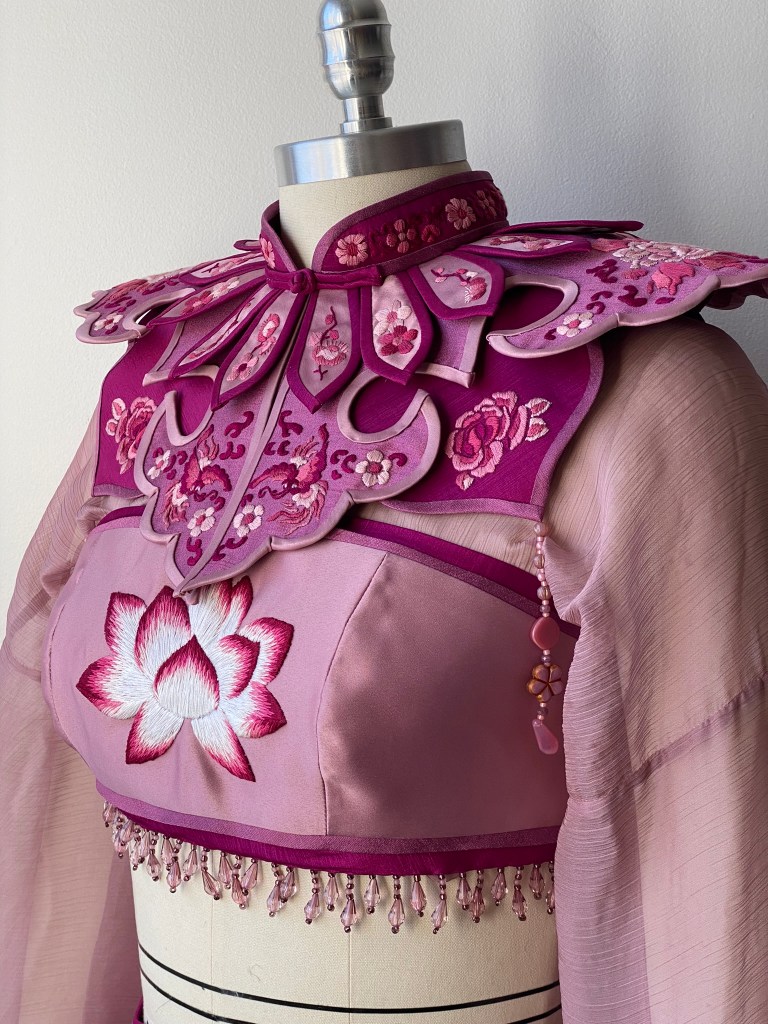
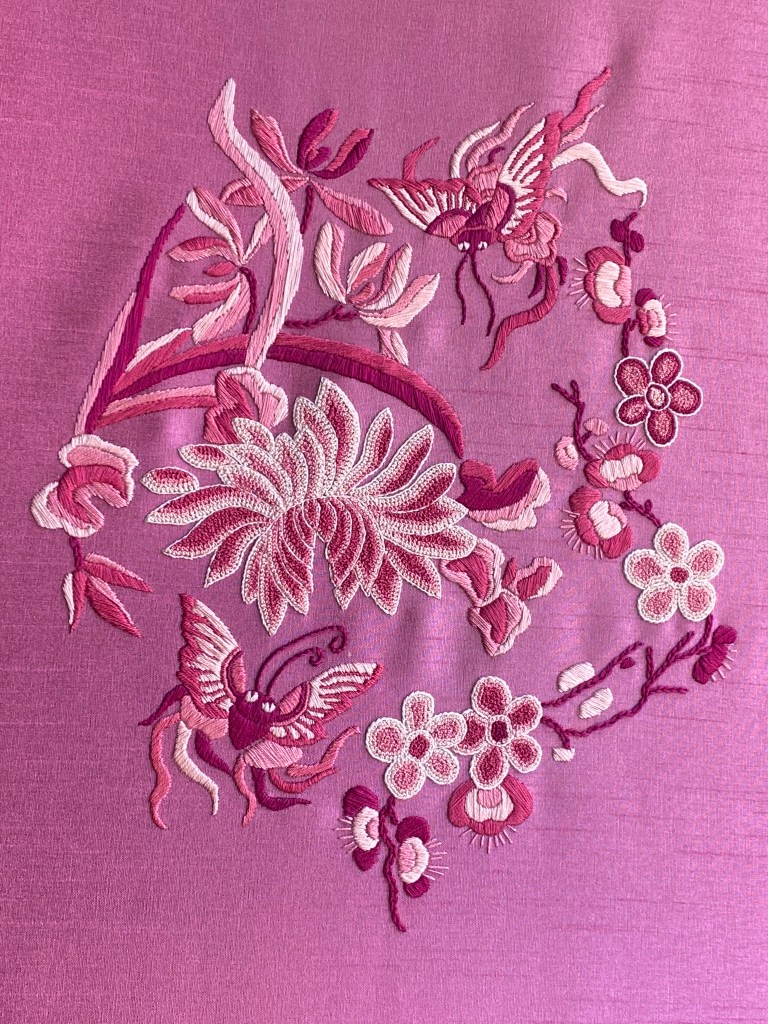
The collar was inspired by Chinese “cloud collars”, called yunjian, which were popularized in the Ming and Qing Dynasties and are still common in hanfu fashion today. The collar was self-drafted and designed to have three layers of hand-embroidered satin and a mandarin collar. The embroidery designs were derived from images of antique Chinese embroidery fragments, which were sliced and rearranged to fit the collar pattern using Inkscape. Embroidery was done by hand using satin stitching. Each layer of the collar was assembled with buckram interfacing and bias binding. To achieve a clean finish, the bias binding was sewn partially by hand. The collar layers and the mandarin collar were sewn together by hand at the neck hole and a hand-made Chinese pankou button was added as a closure. Dangling glass beads were sewn on to a few of the corners.
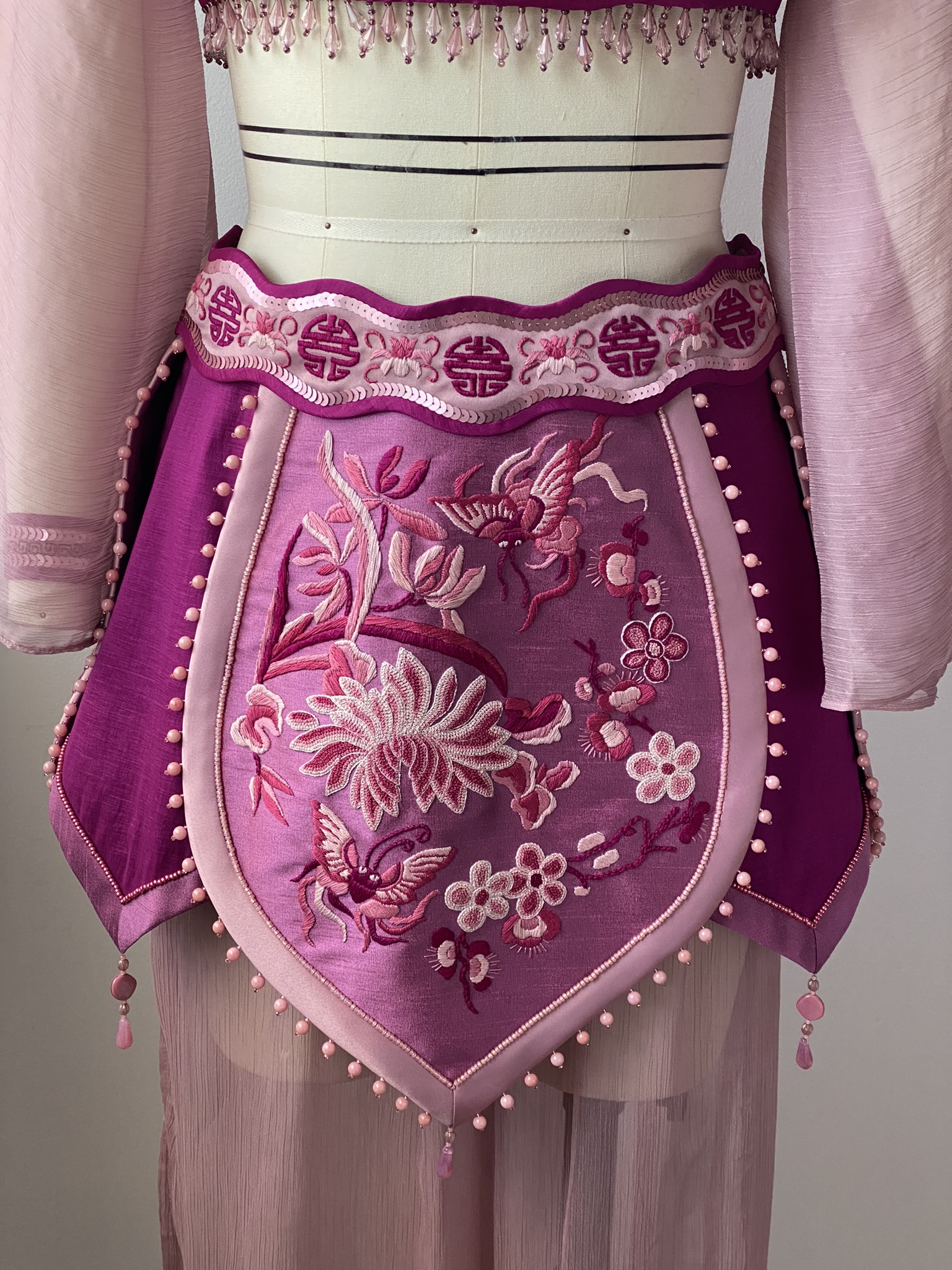
Paneled Skirt
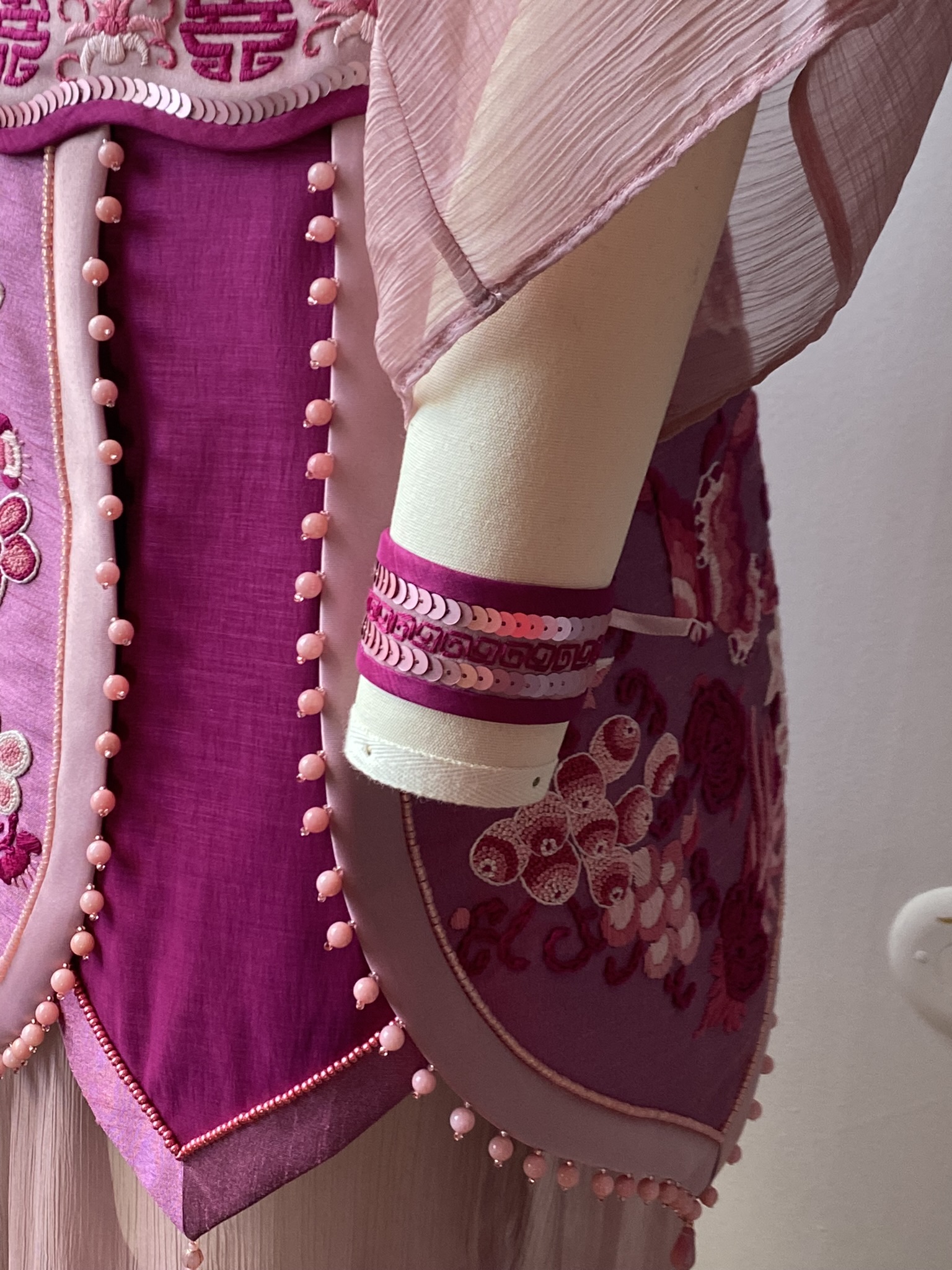
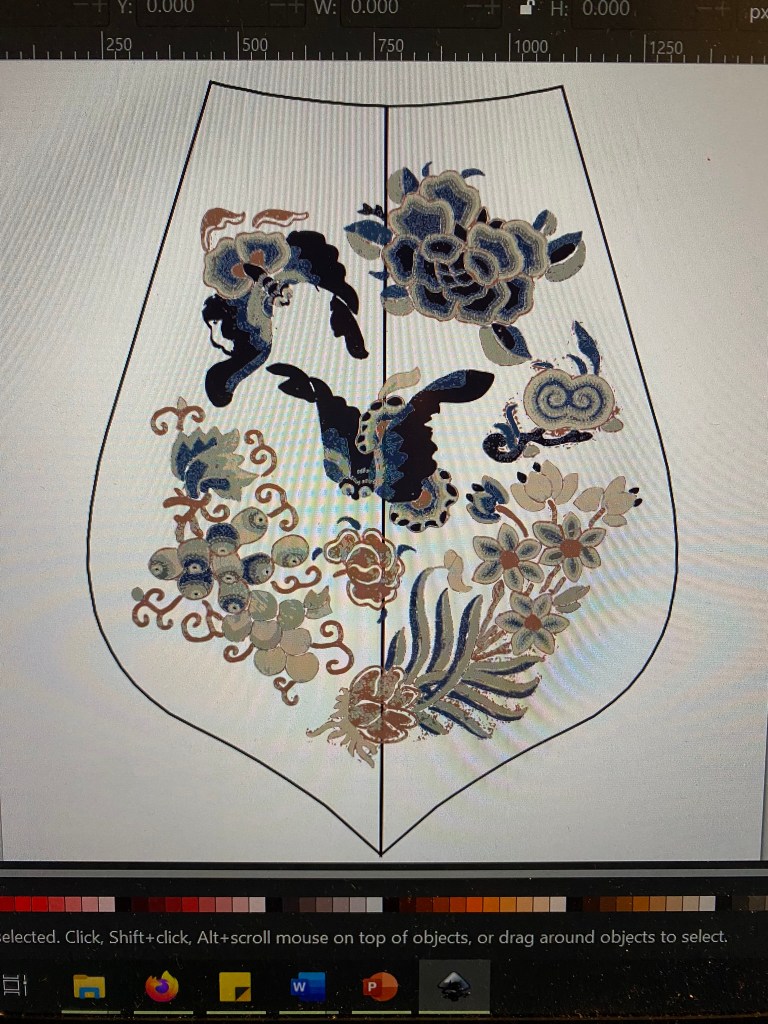
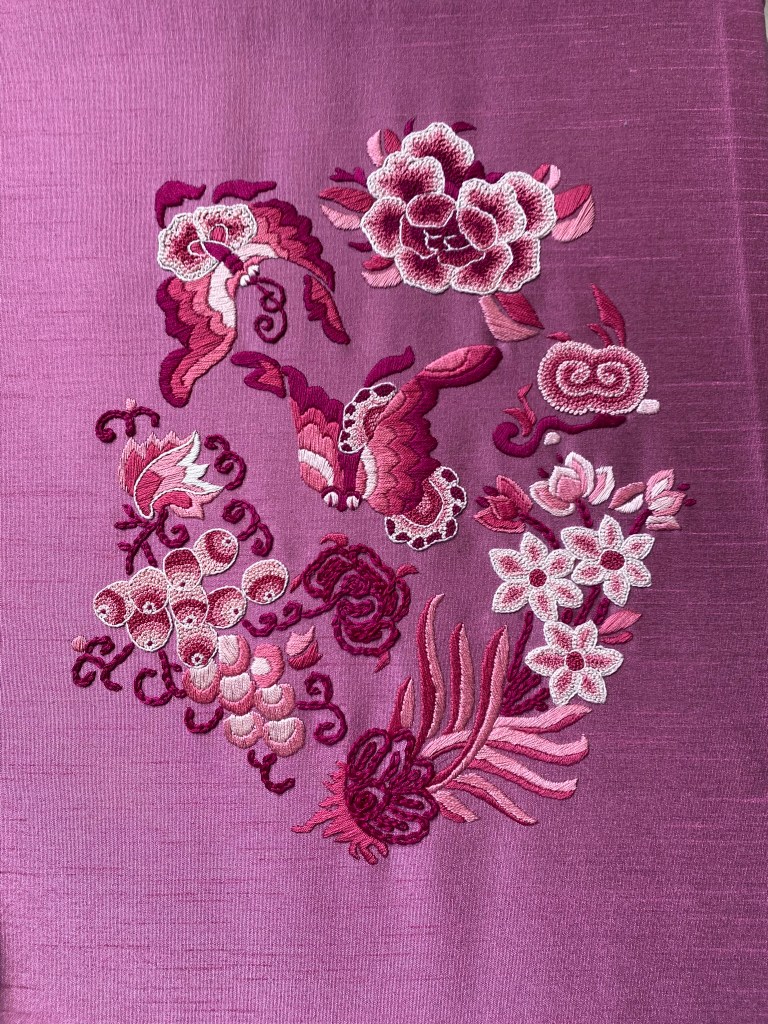
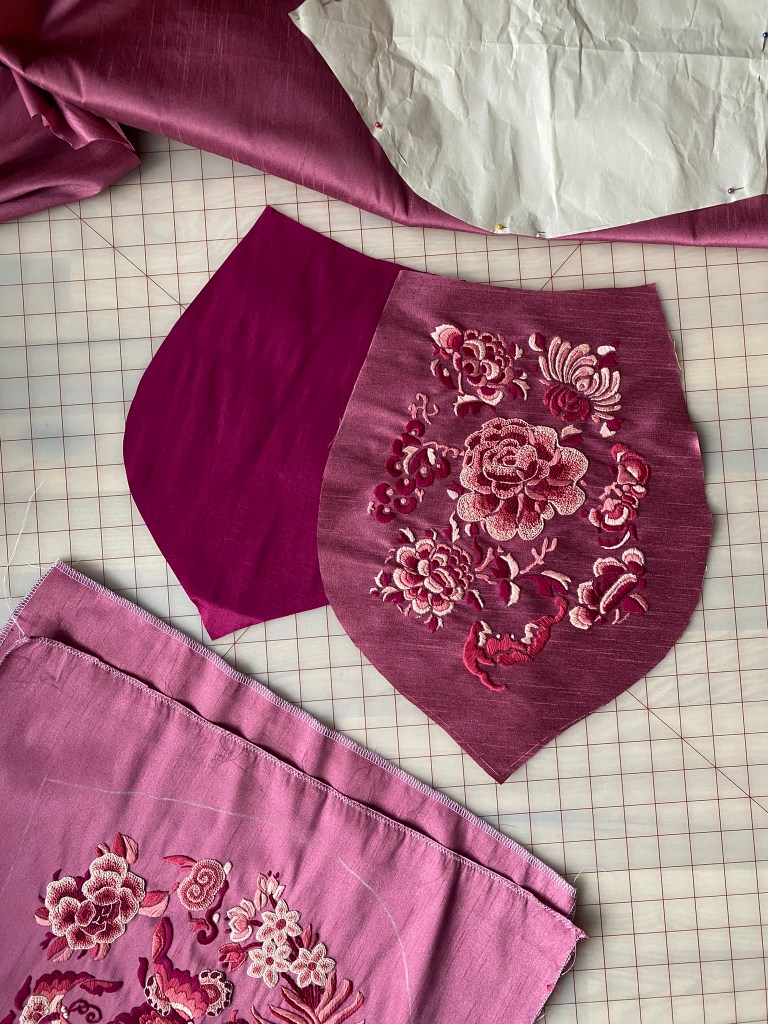
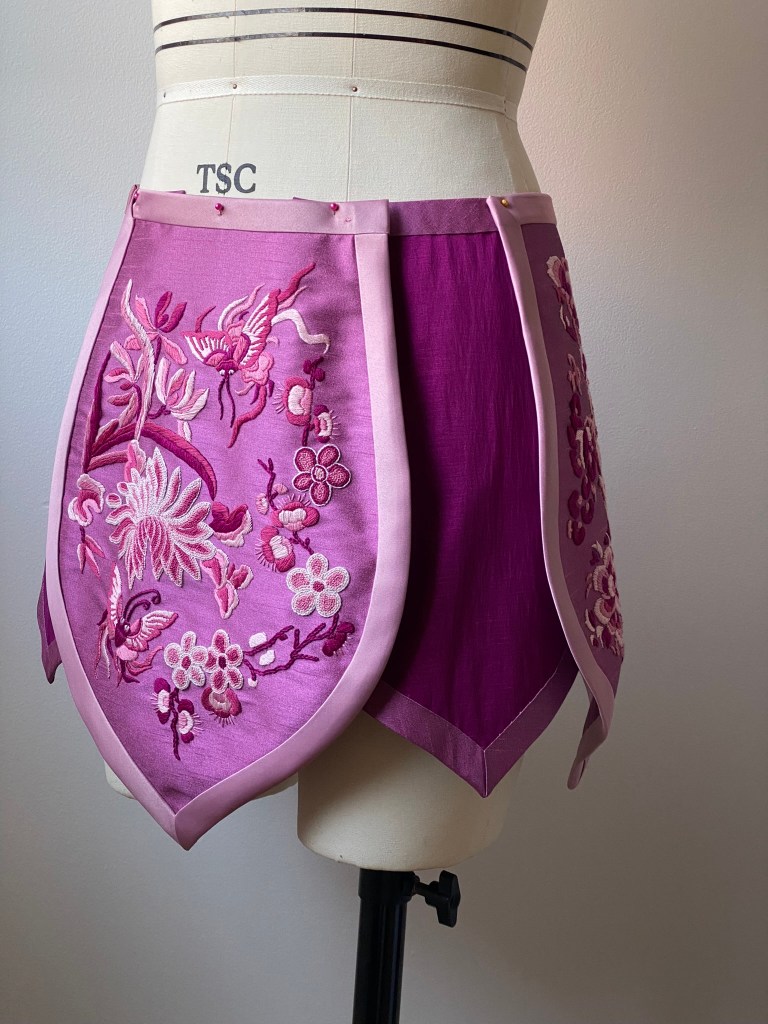
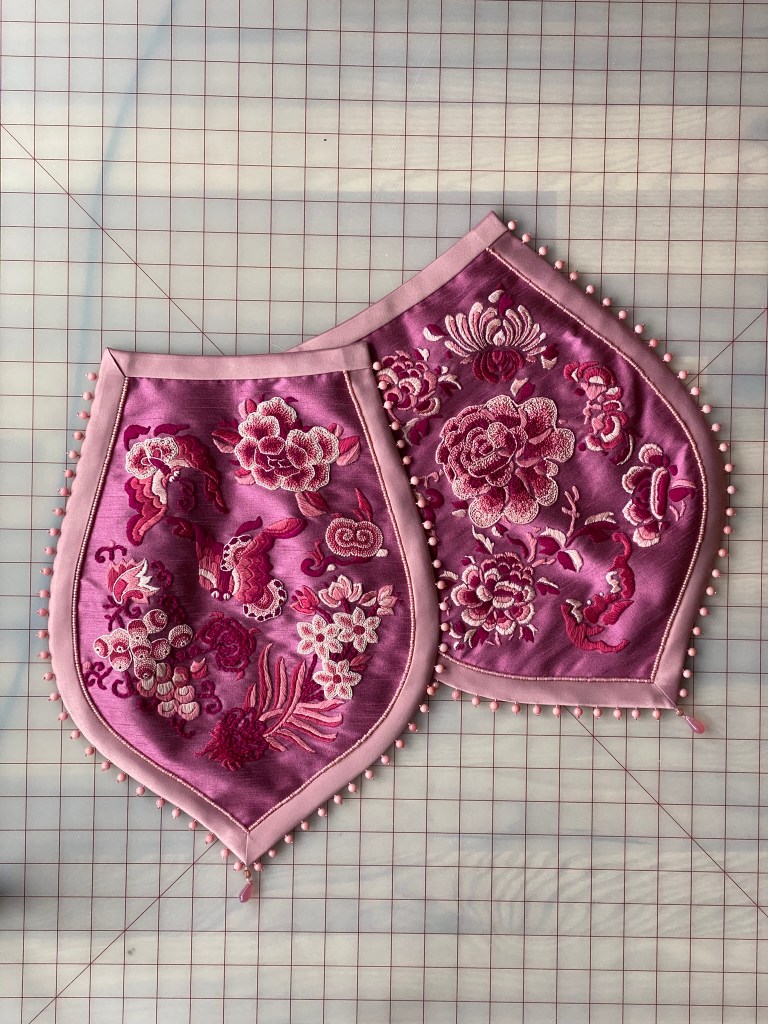
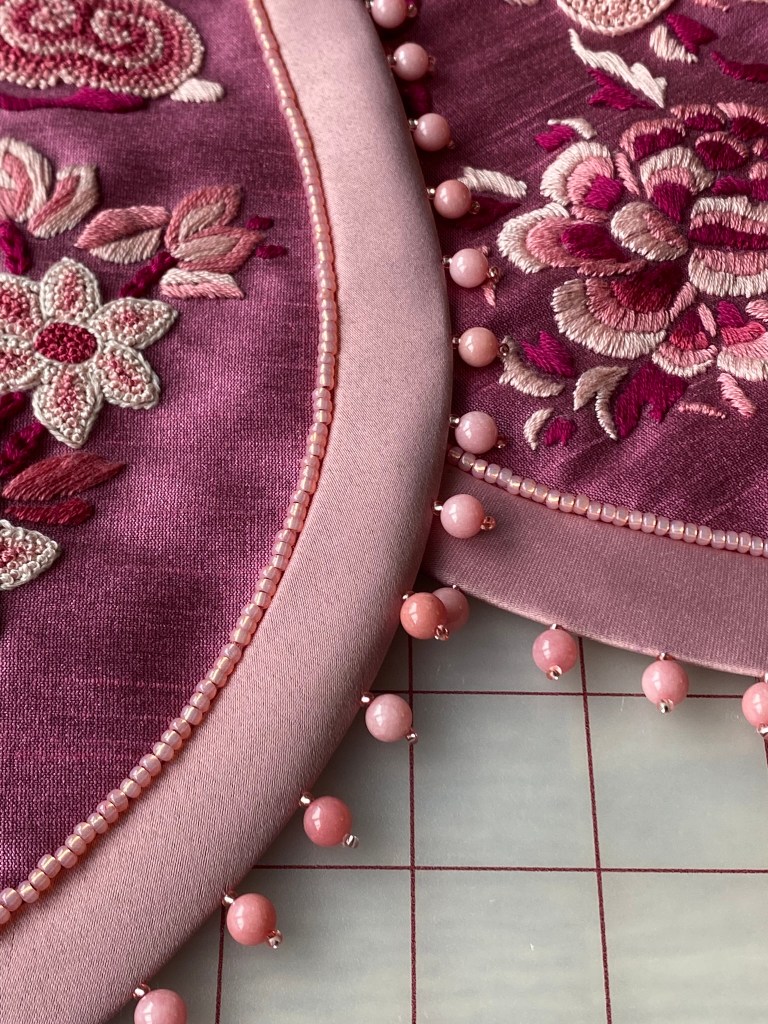
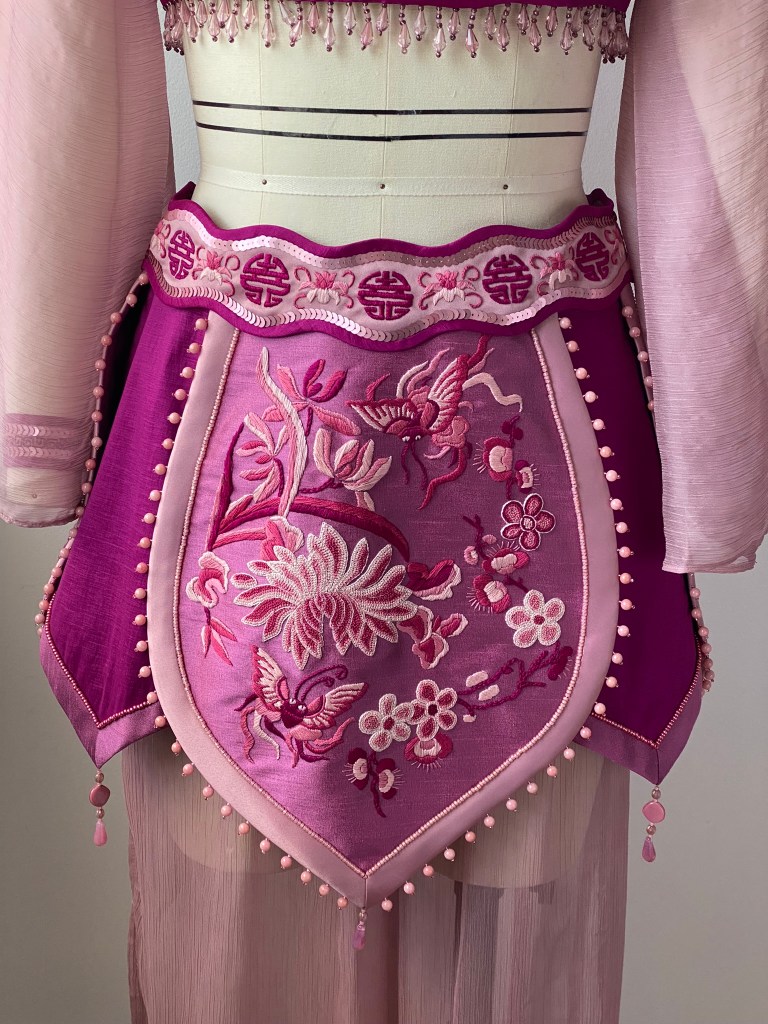
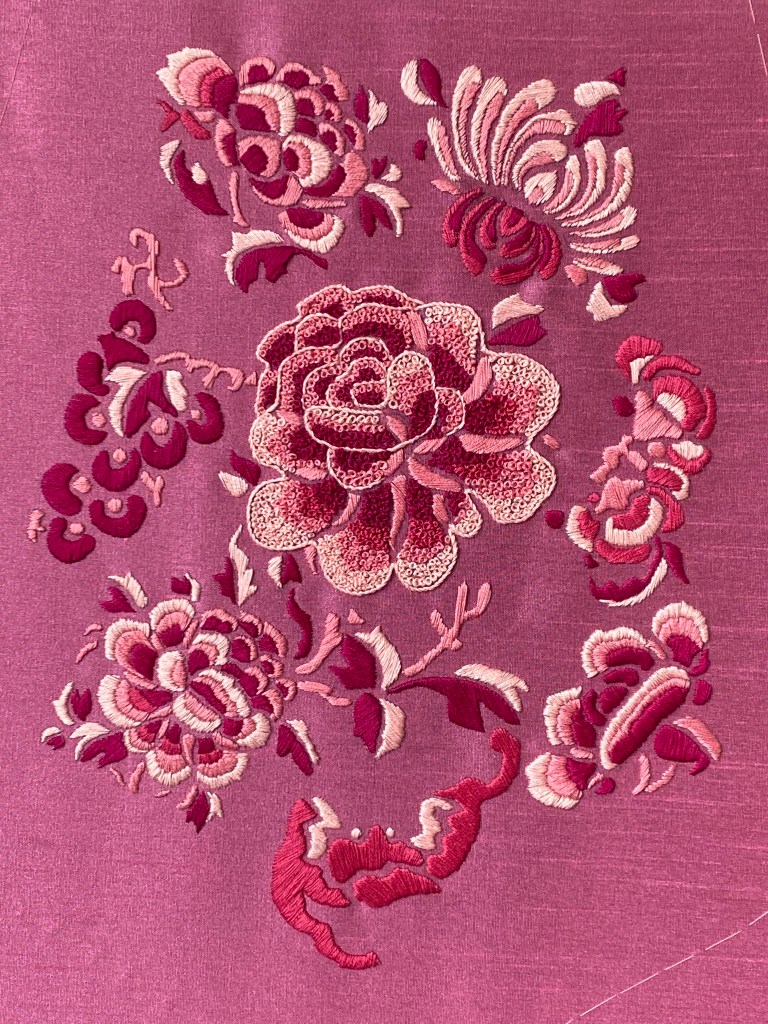
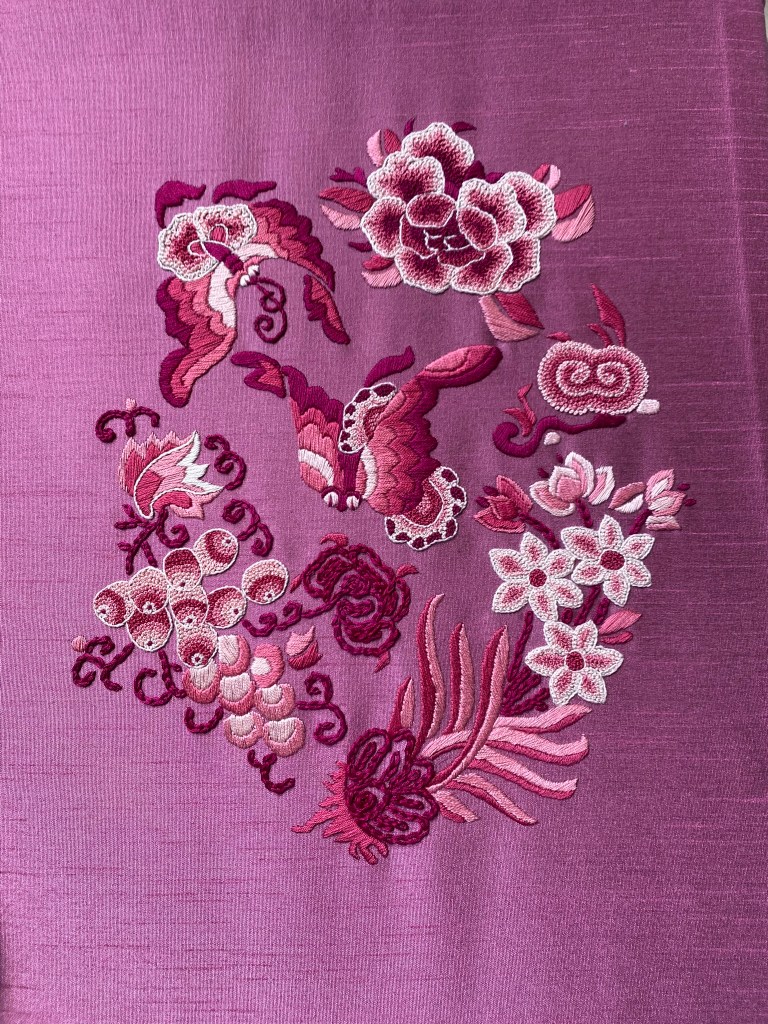
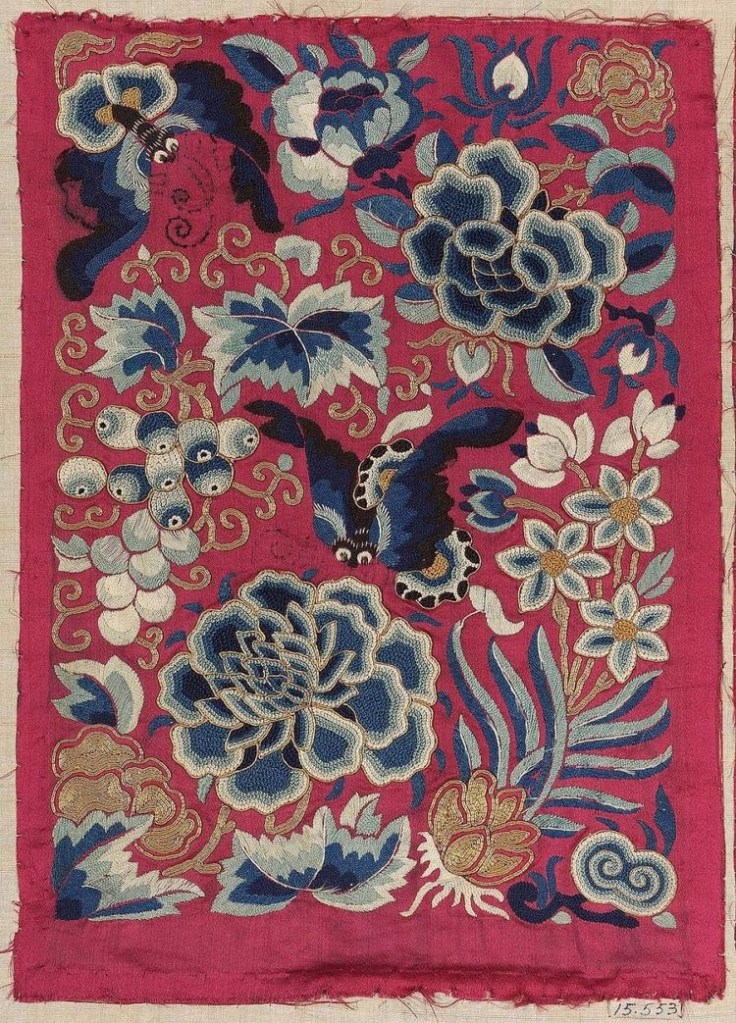
The “skirt” is inspired by modern Chinese dance costumes and consists of six overlapping panels, three of which are embroidered by hand. The designs on each embroidered panel take direct inspiration from Qing Dynasty embroidered skirt panels within the collection of the MFA Boston. Images of the embroidery references were sliced and rearranged to fit the skirt pattern using Inkscape. Embroidery was done by hand using satin, chain, and stem stitches, along with Chinese knots. The panels were assembled with muslin interfacing and bias binding. Beads were sewn along the inner and outer edges of the binding, and at the tip of each panel. A series of snaps was sewn at the top of the panels to connect them.
Belt
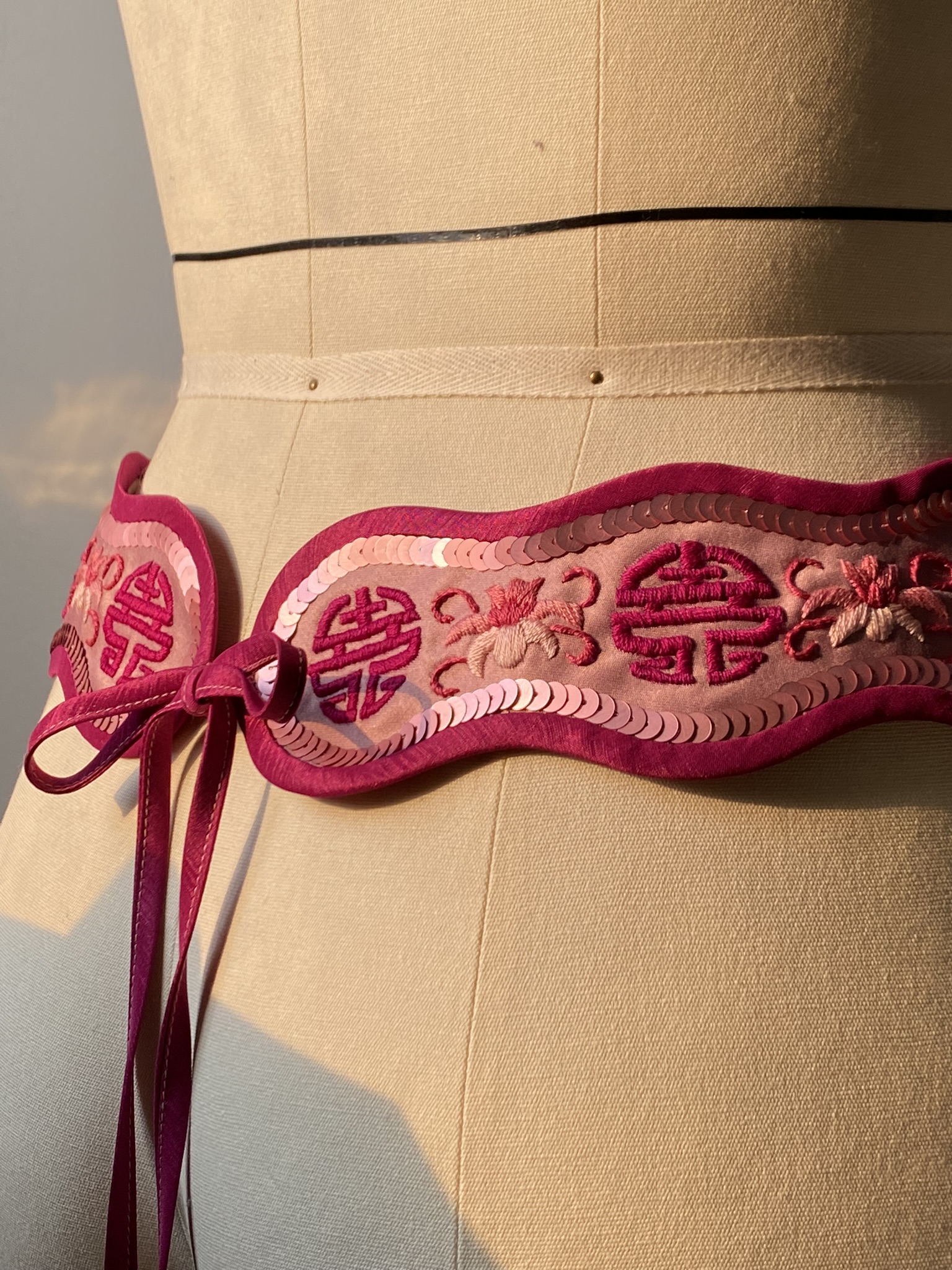
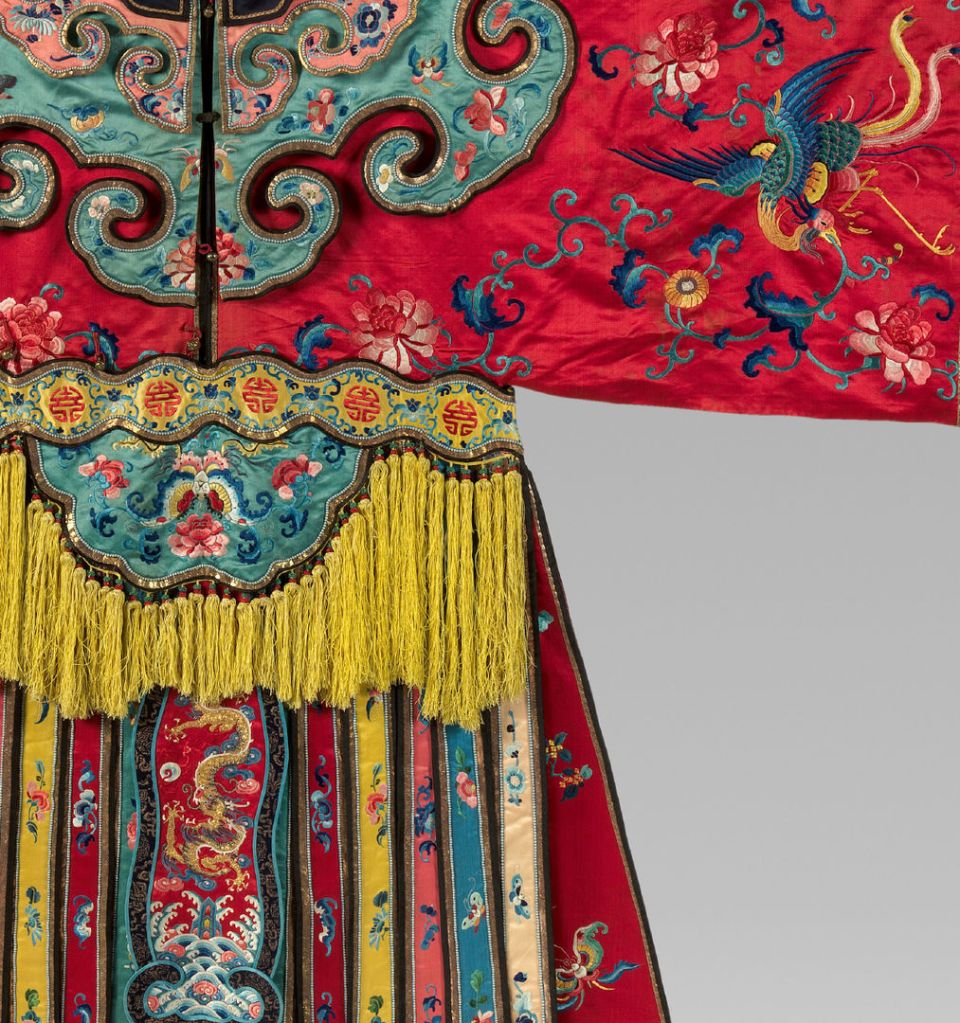
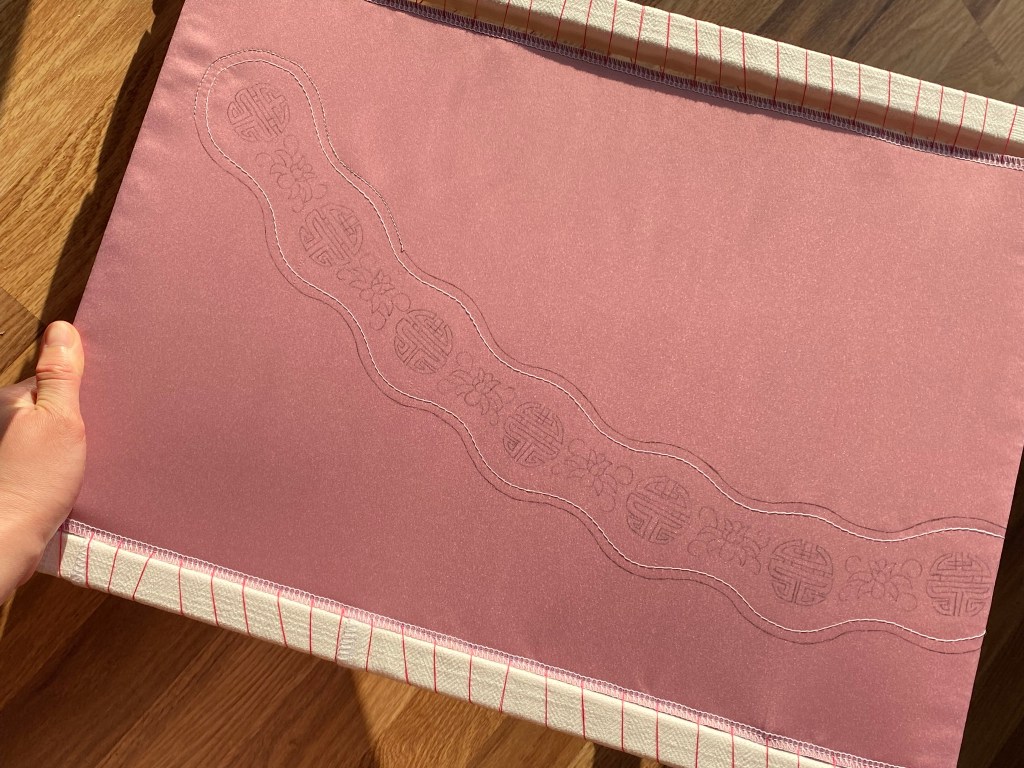
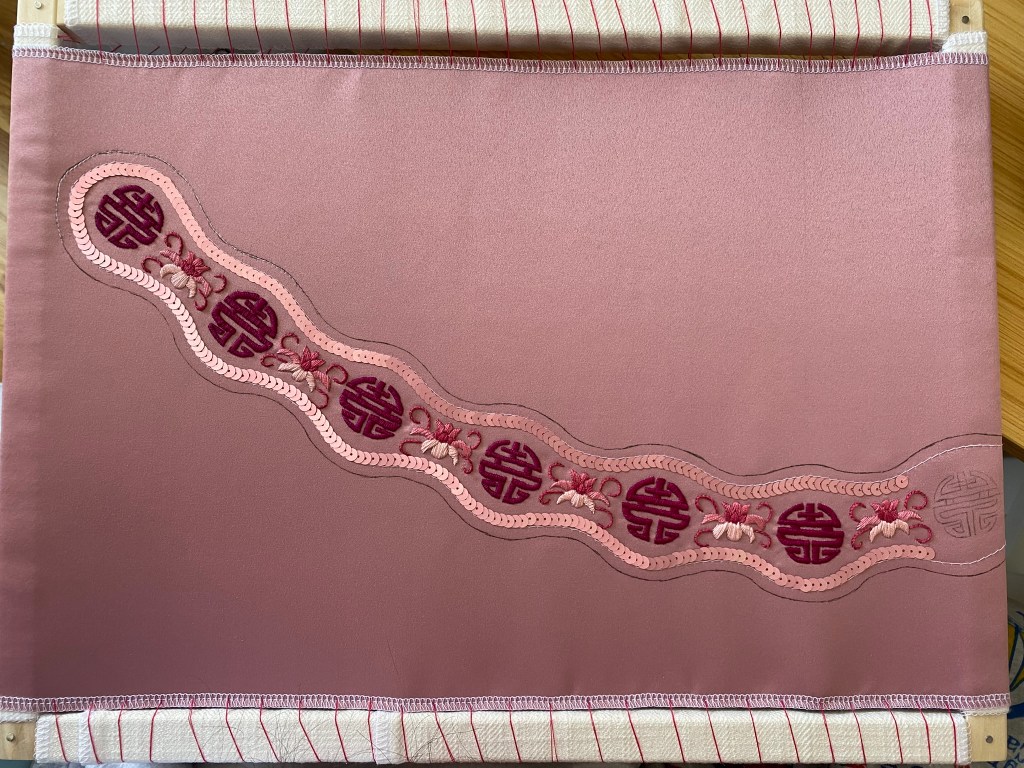
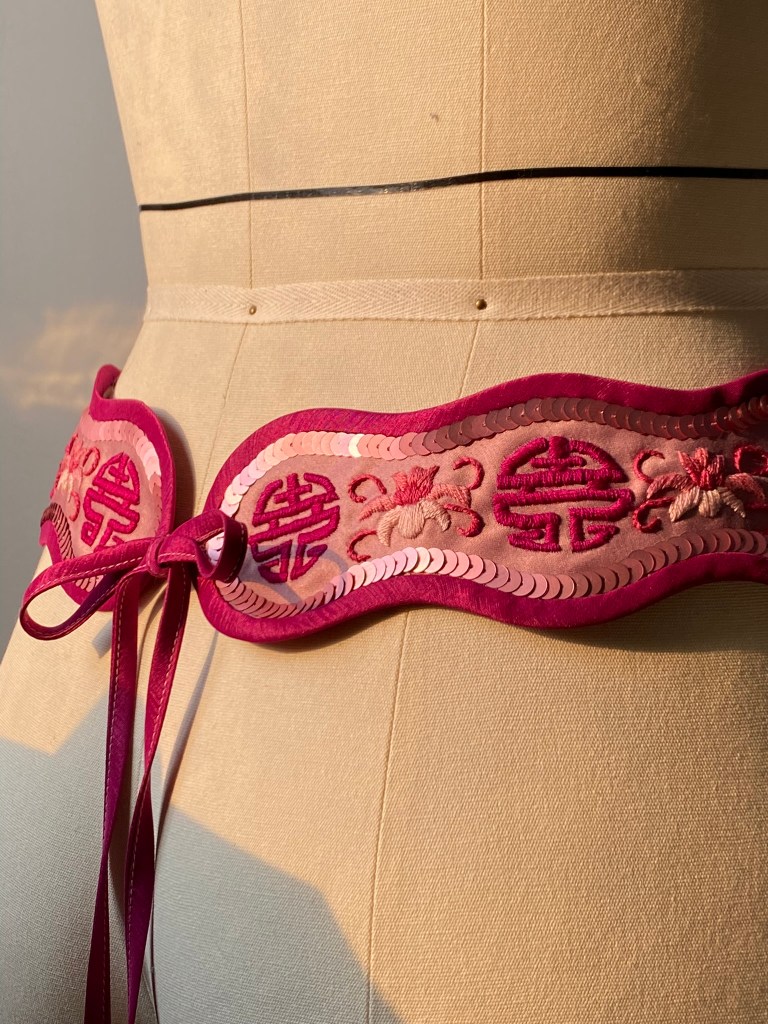
The belt design is based on a specific Chinese opera costume belt within the collection of the Metropolitan Museum of Art. The referenced belt contains a stylized character for longevity, floral embroidery, and metallic sequins. For this cosplay a curved belt pattern with a series of ellipses was self-drafted, and embroidery designs based on the referenced belt. The designs were transferred to satin fabric which was stretched over a DIY frame. The design was embroidered by hand, along with sequins near the belt edge. Bias binding was sewn by hand along the belt edge and ties attached to the ends.
Hezi
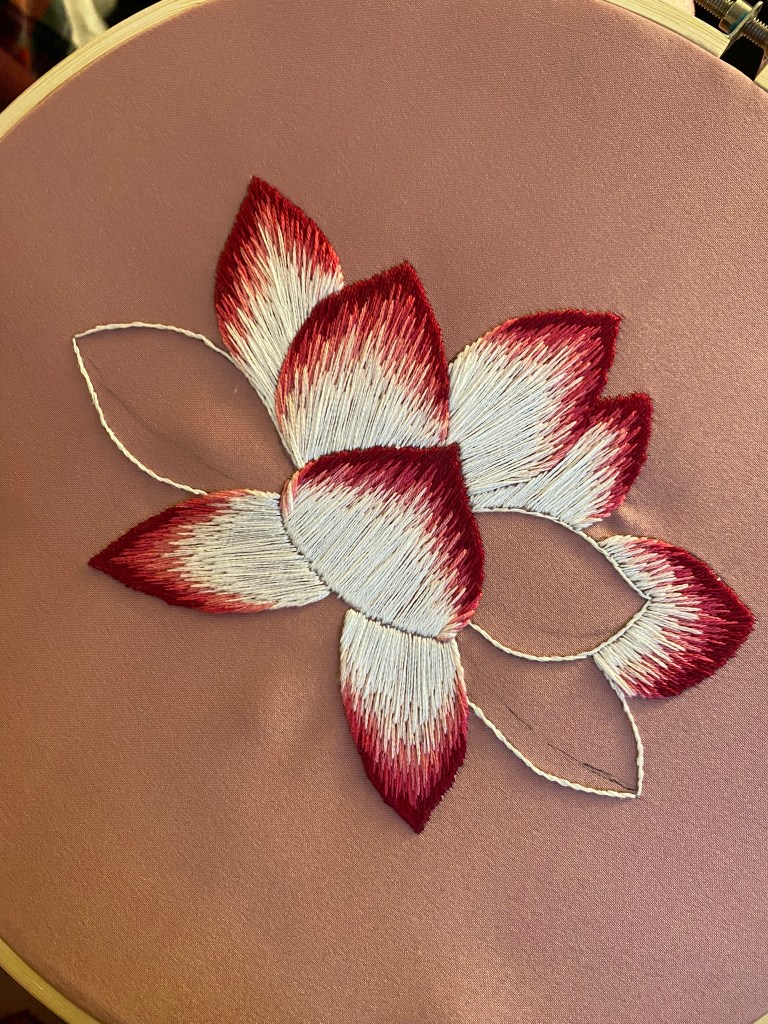
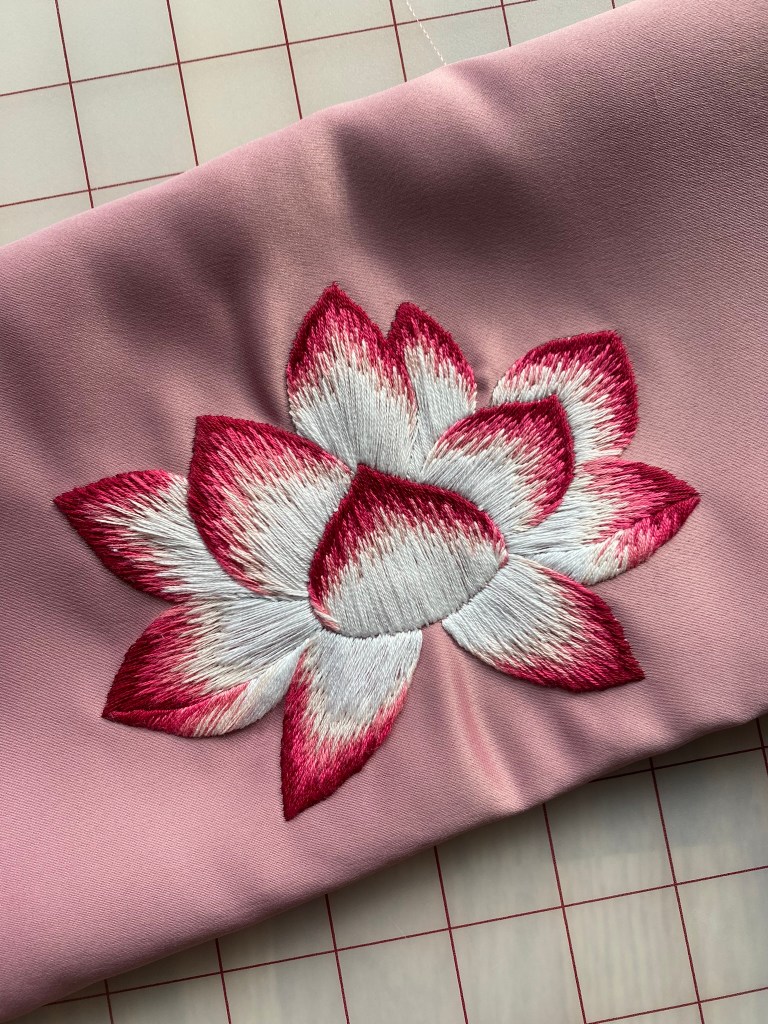
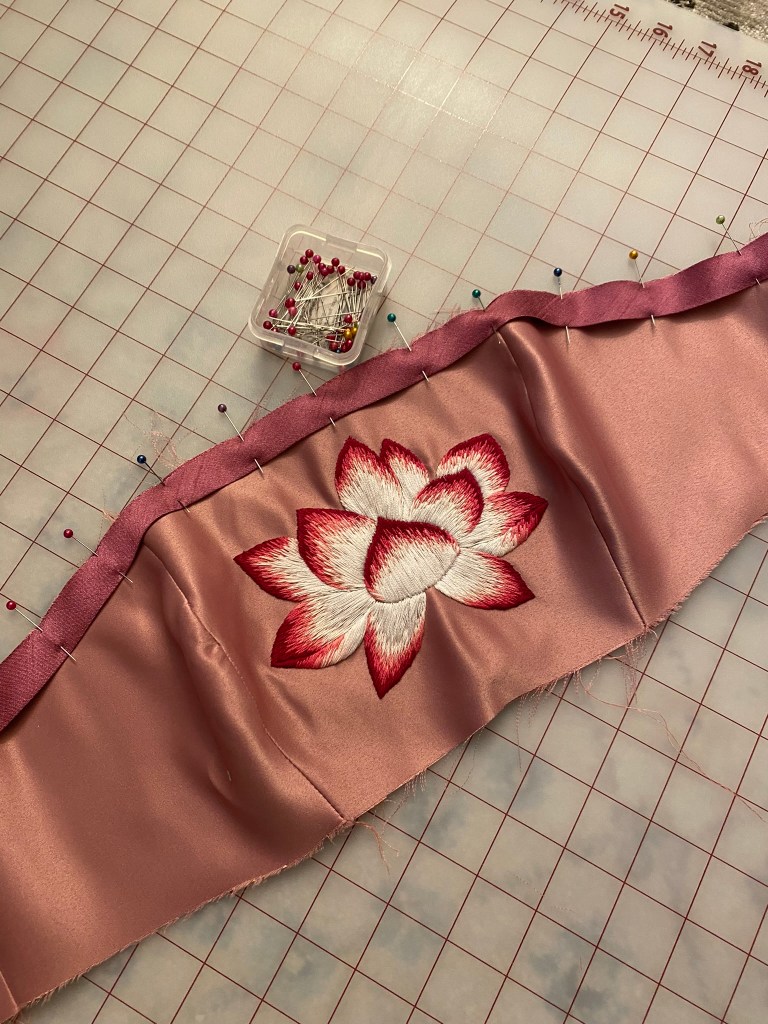
The bandeau style top is inspired by Chinese hezi which were chest coverings originating in the Tang Dynasty and still popular in hanfu fashion. To start the top, a piece of pink satin was embroidered with the image of lotus. A princess seam bandeau top pattern was drafted and cut from the embroidered fabric. The pattern pieces and lining were assembled, and a satin border was sewn along the upper and lower edges. Beaded trim was hand-sewn to the bottom edge and grommets were added to the back for closure.
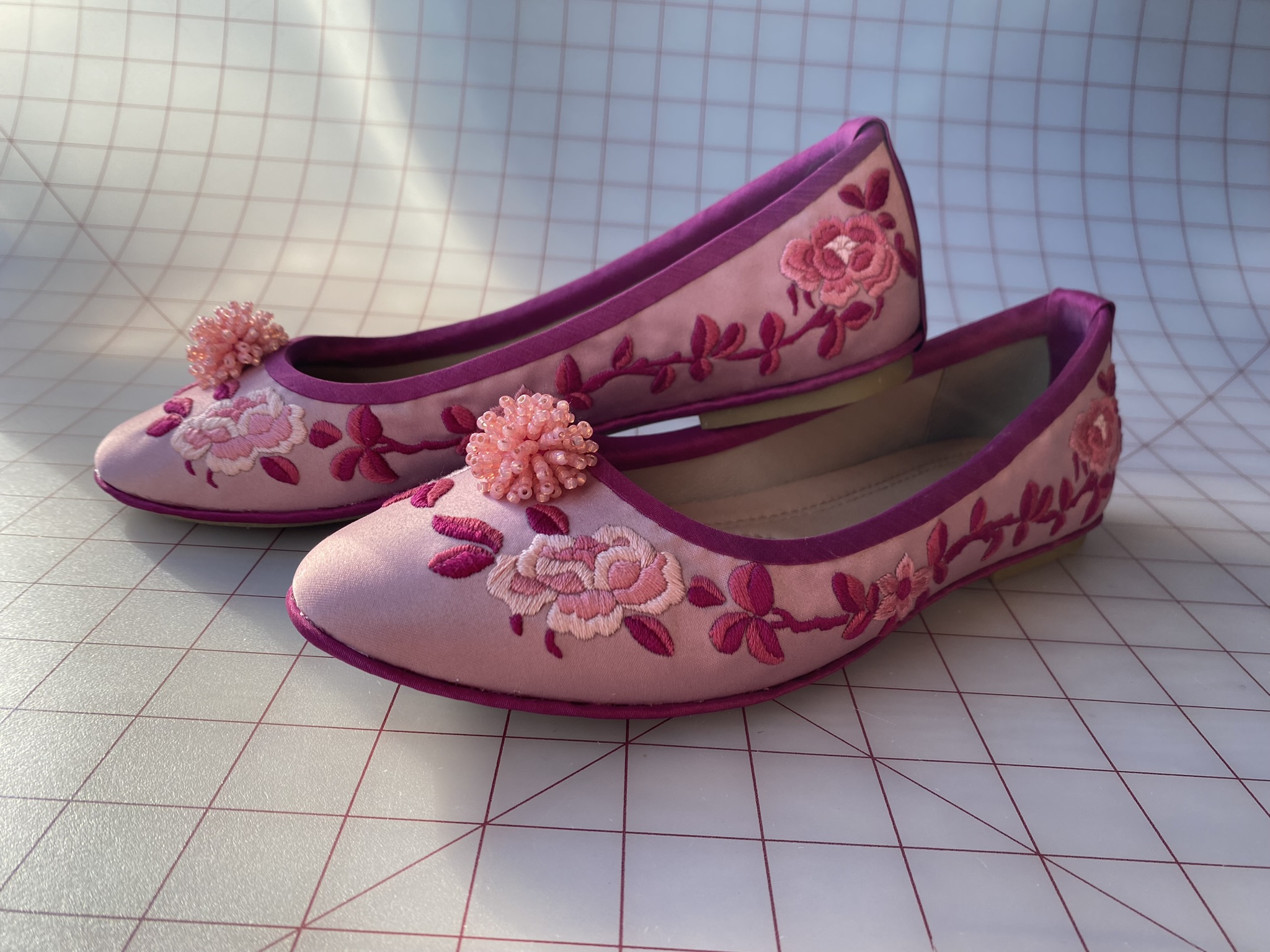
Shoes
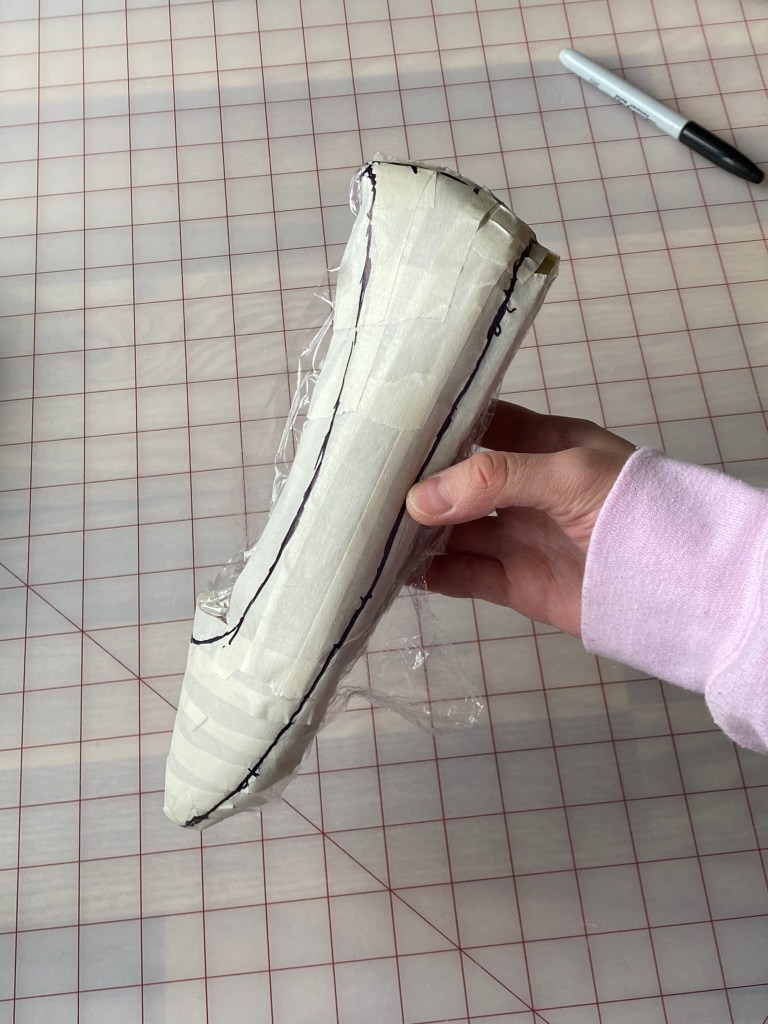
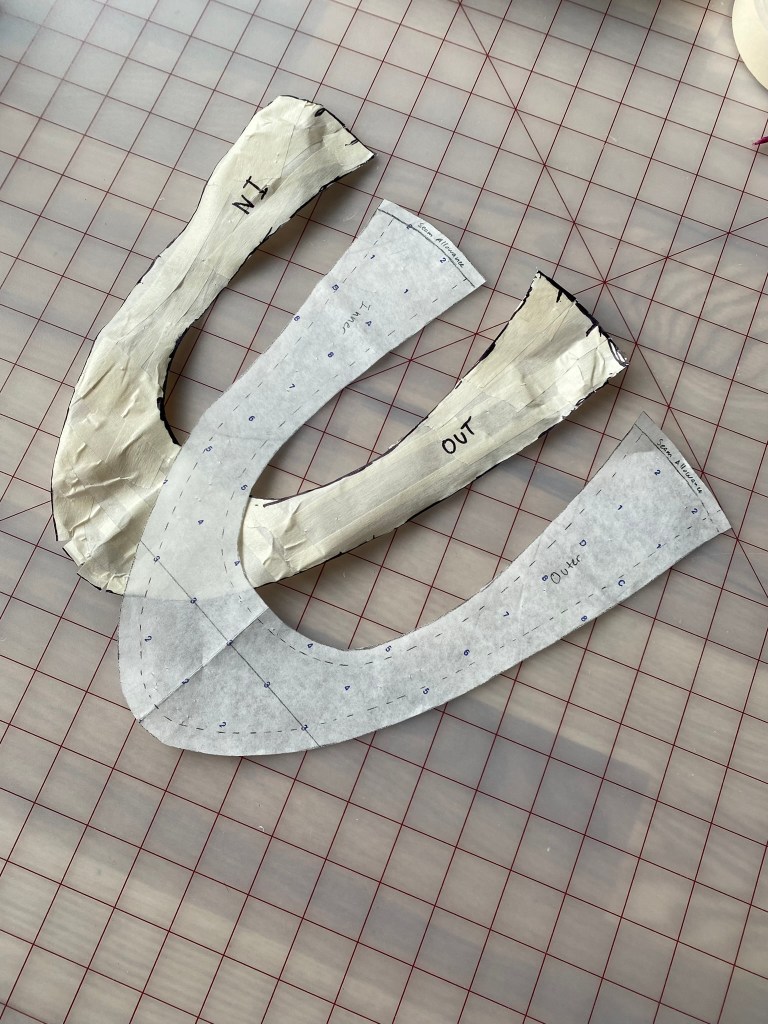
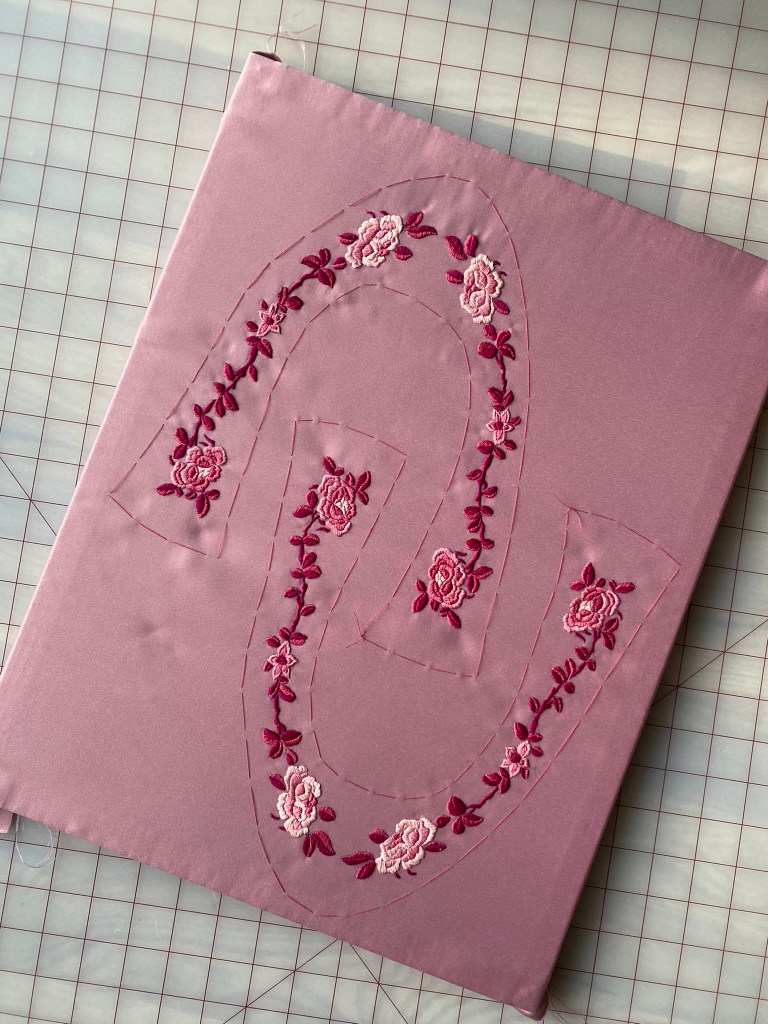
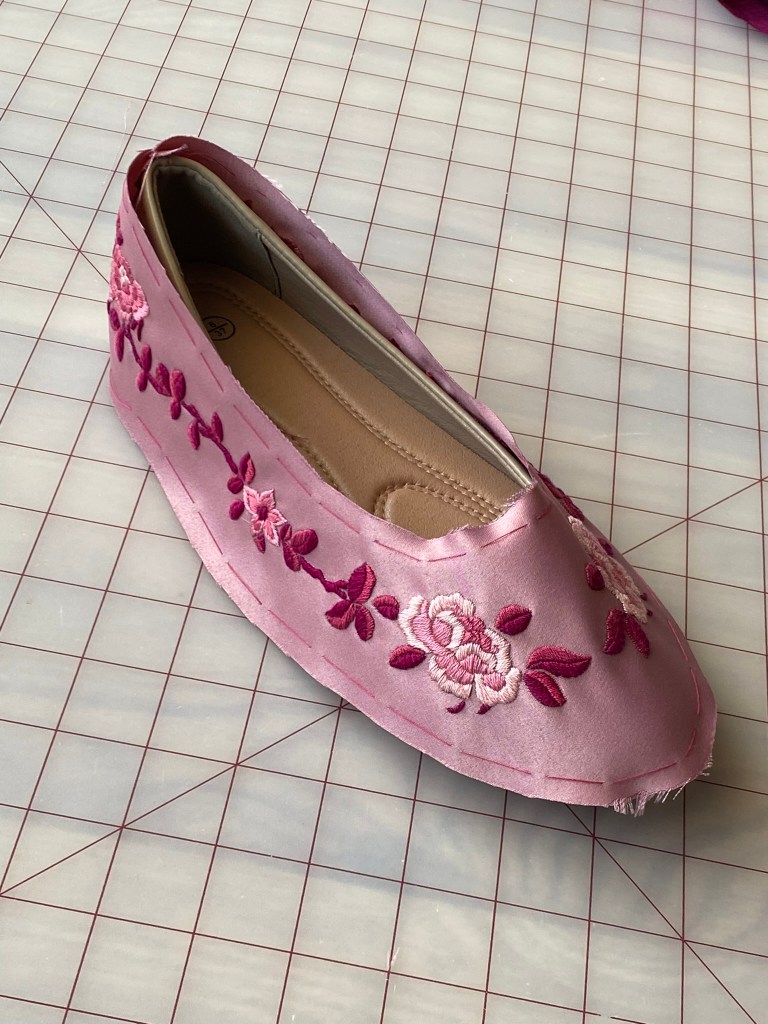
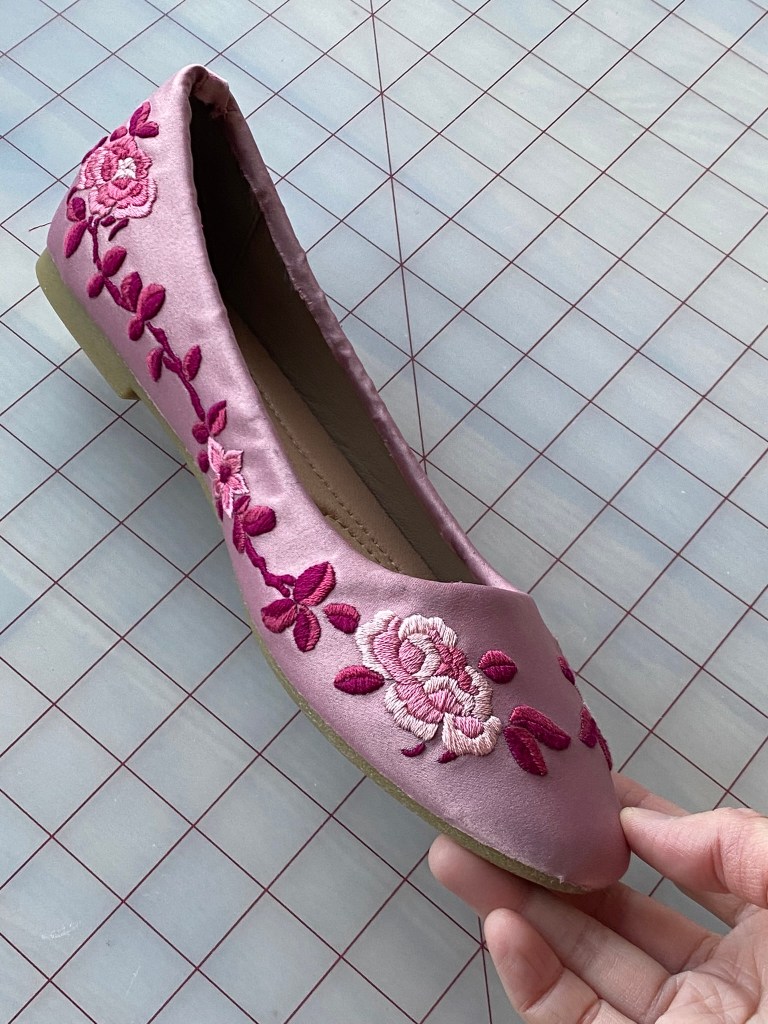
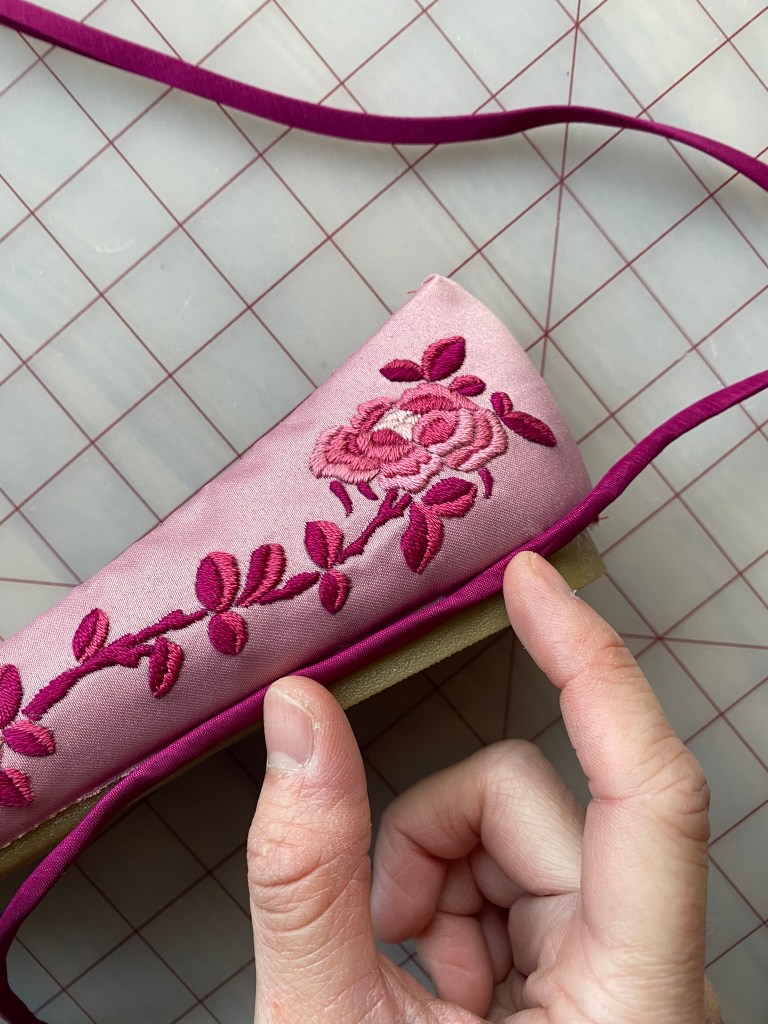
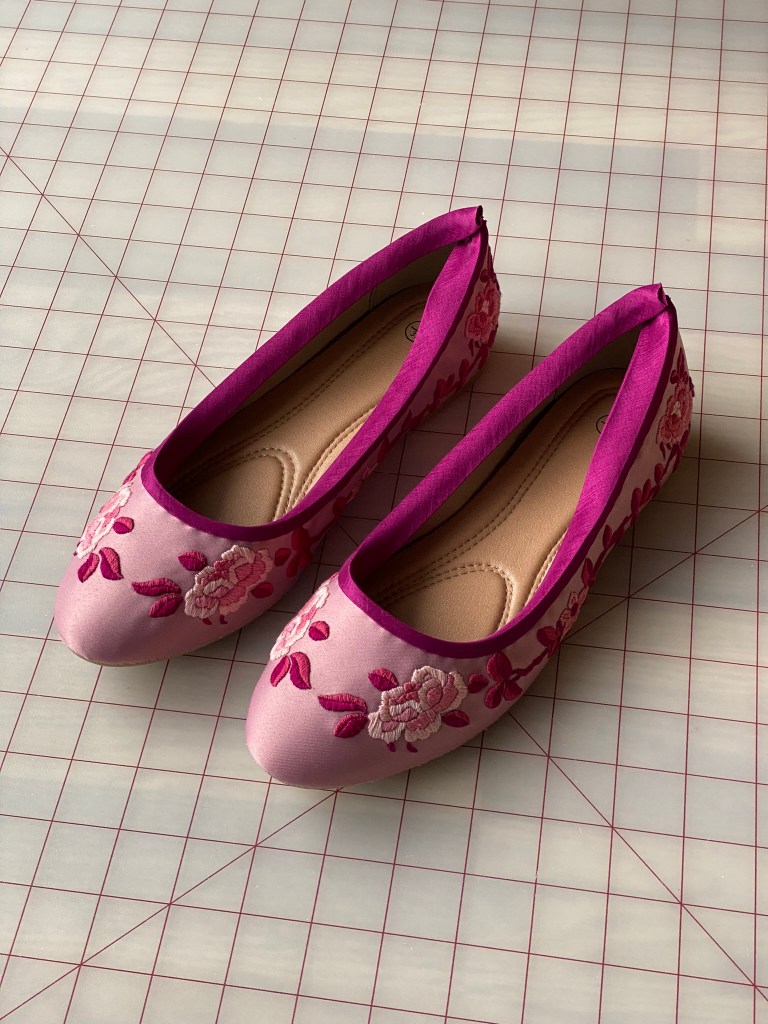
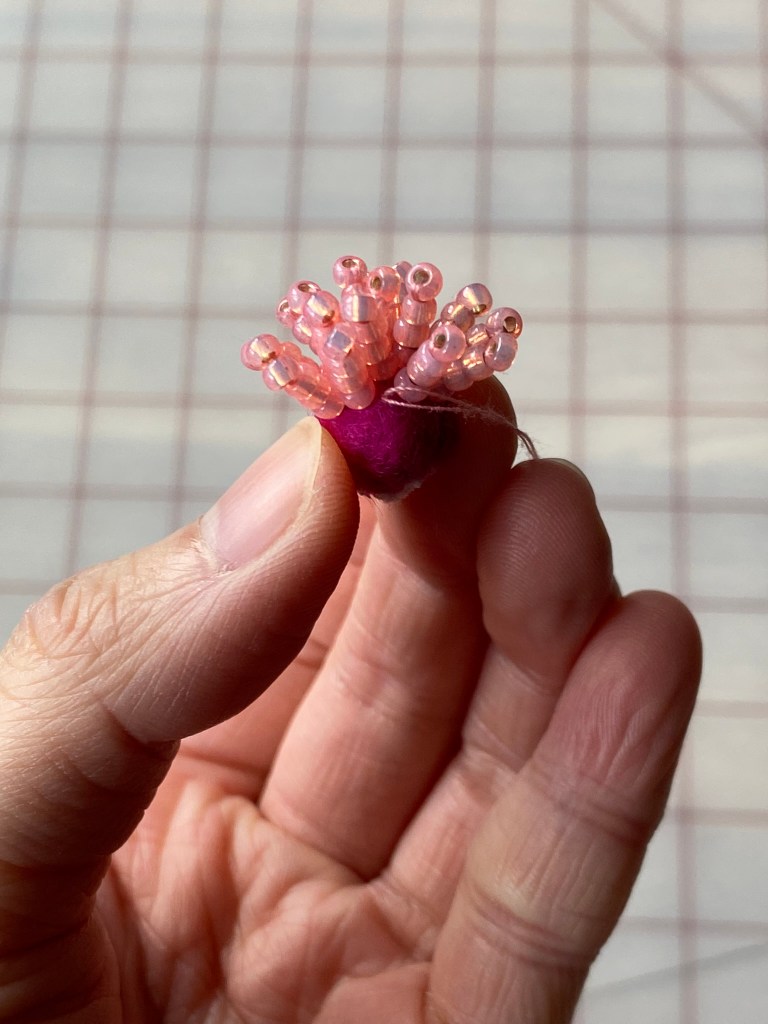
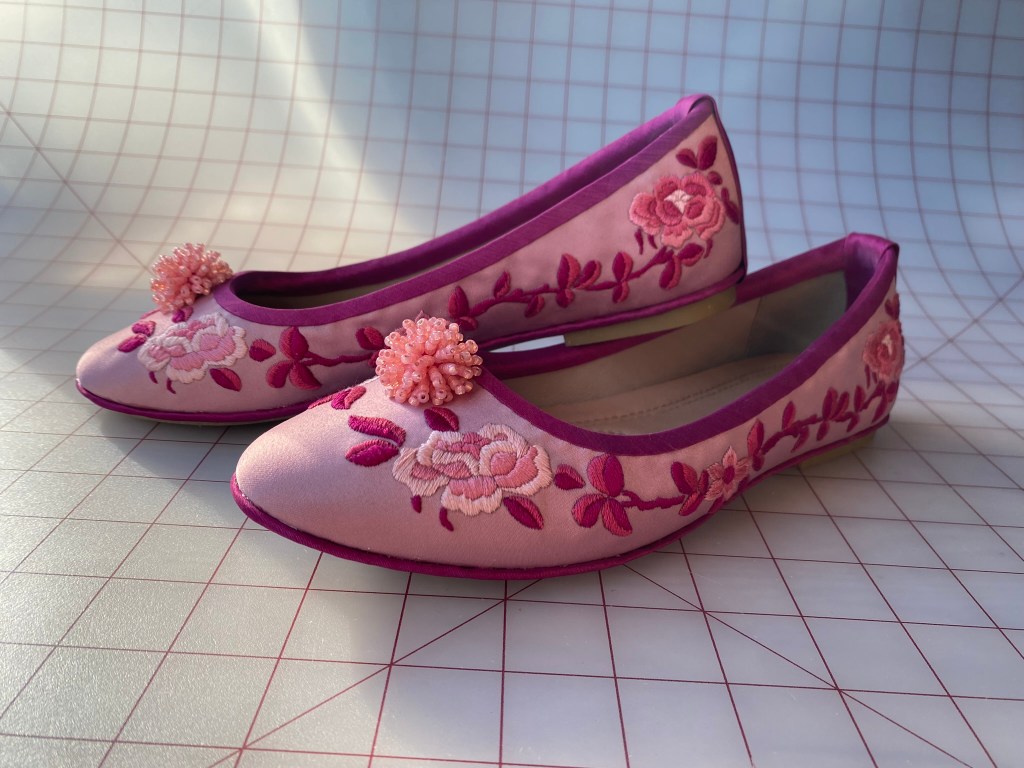
A shoe pattern was created for an existing pair of ballet flats using the plastic wrap and tape method. Embroidery patterns were created based on an antique embroidery fragment within the collection of the MFA Boston. The hand-embroidered satin pieces were cut out and glued to the ballet flats using E6000. Bias binding and a rouleau cord were sewn/glued onto the upper and lower edges of each shoe. Handmade beaded pom poms were glued onto the front of each shoe.
Wrap-Top & Tie-Around Pants
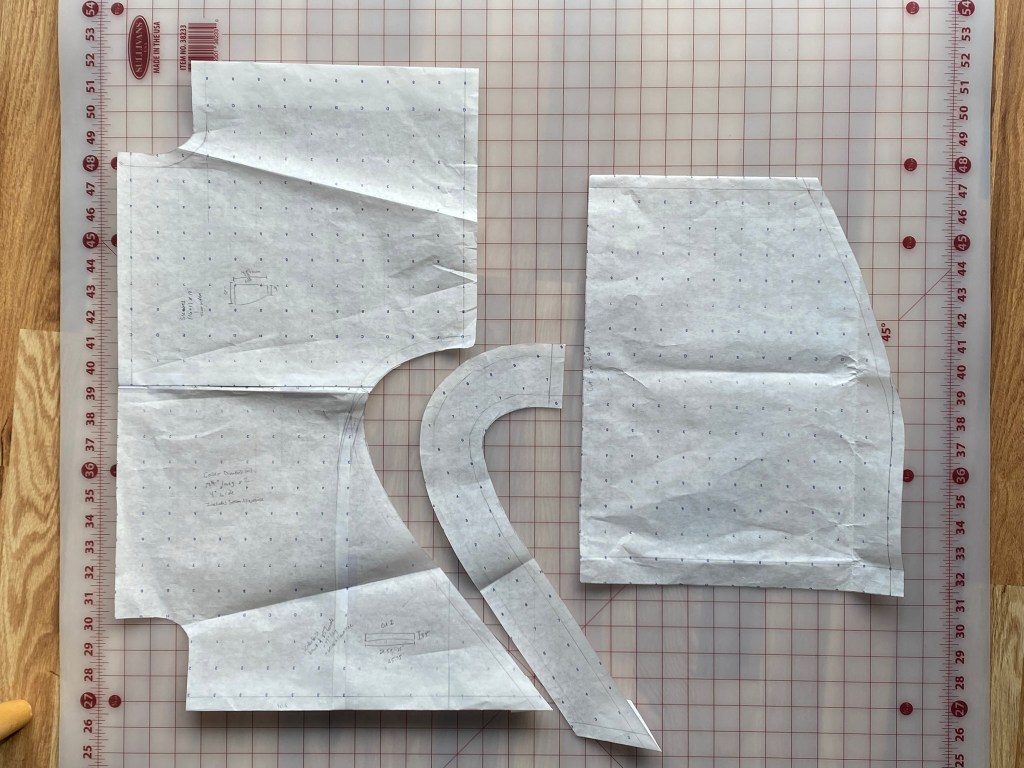
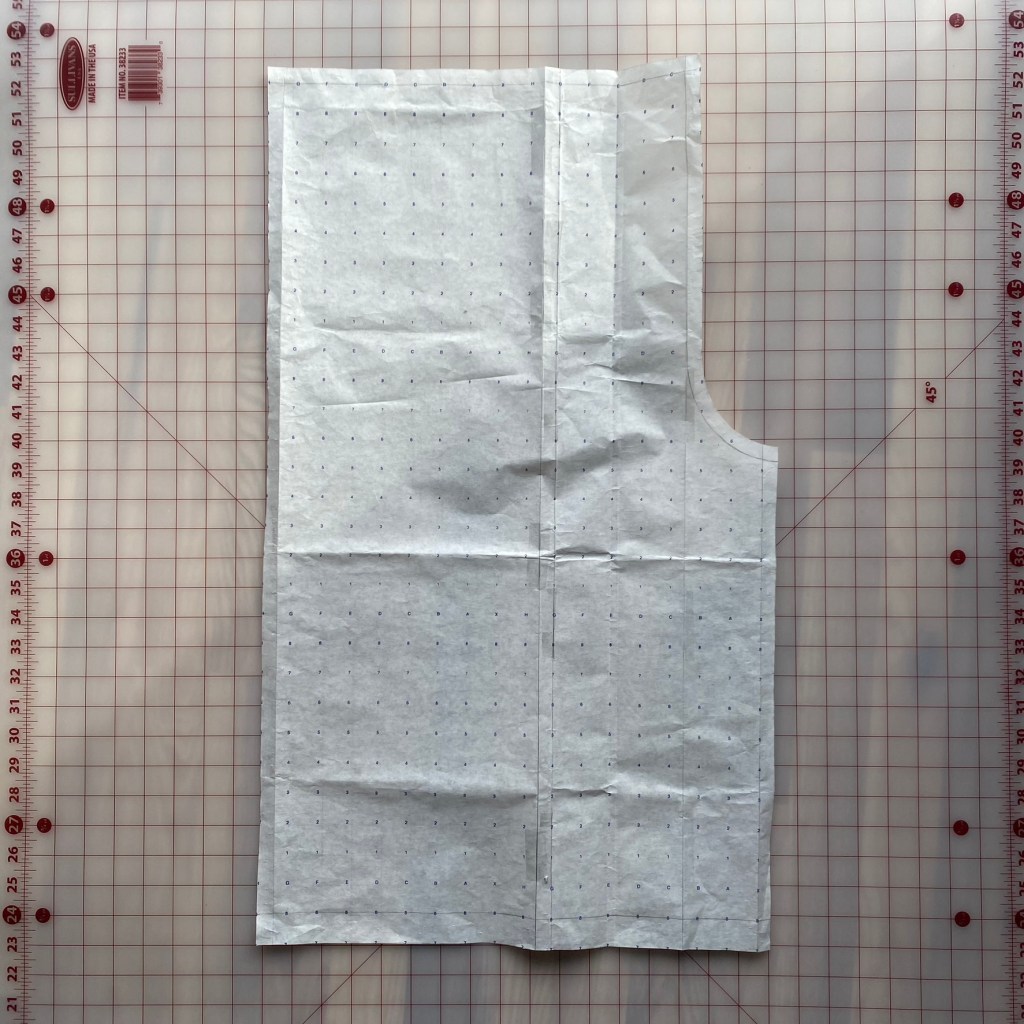
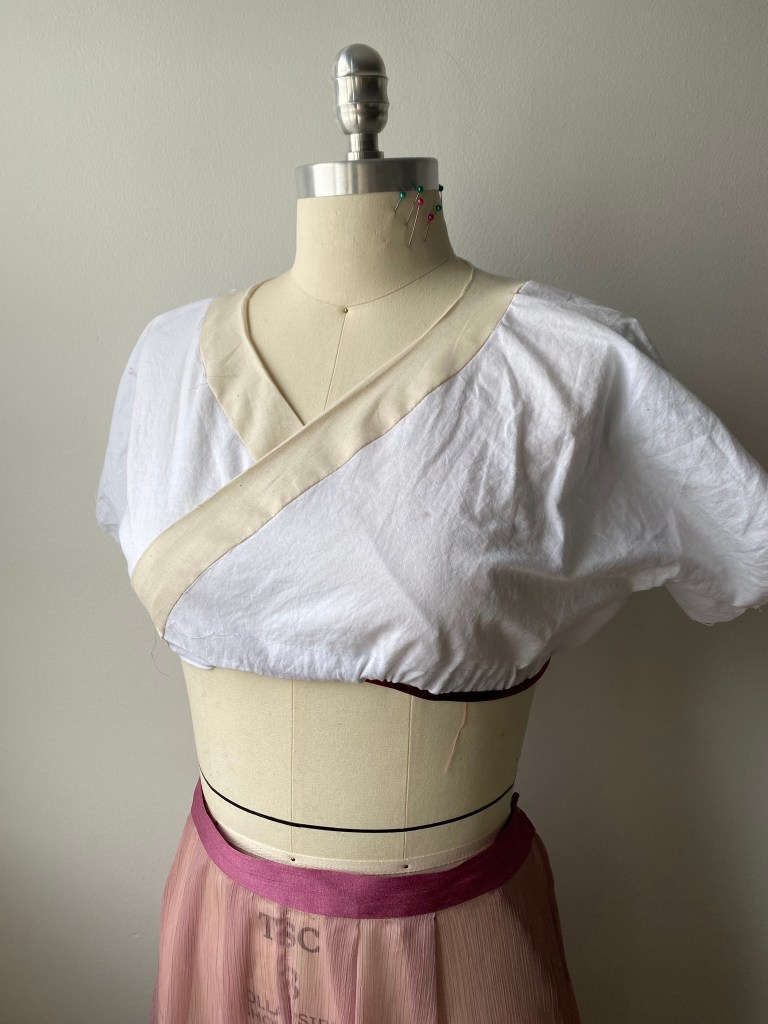
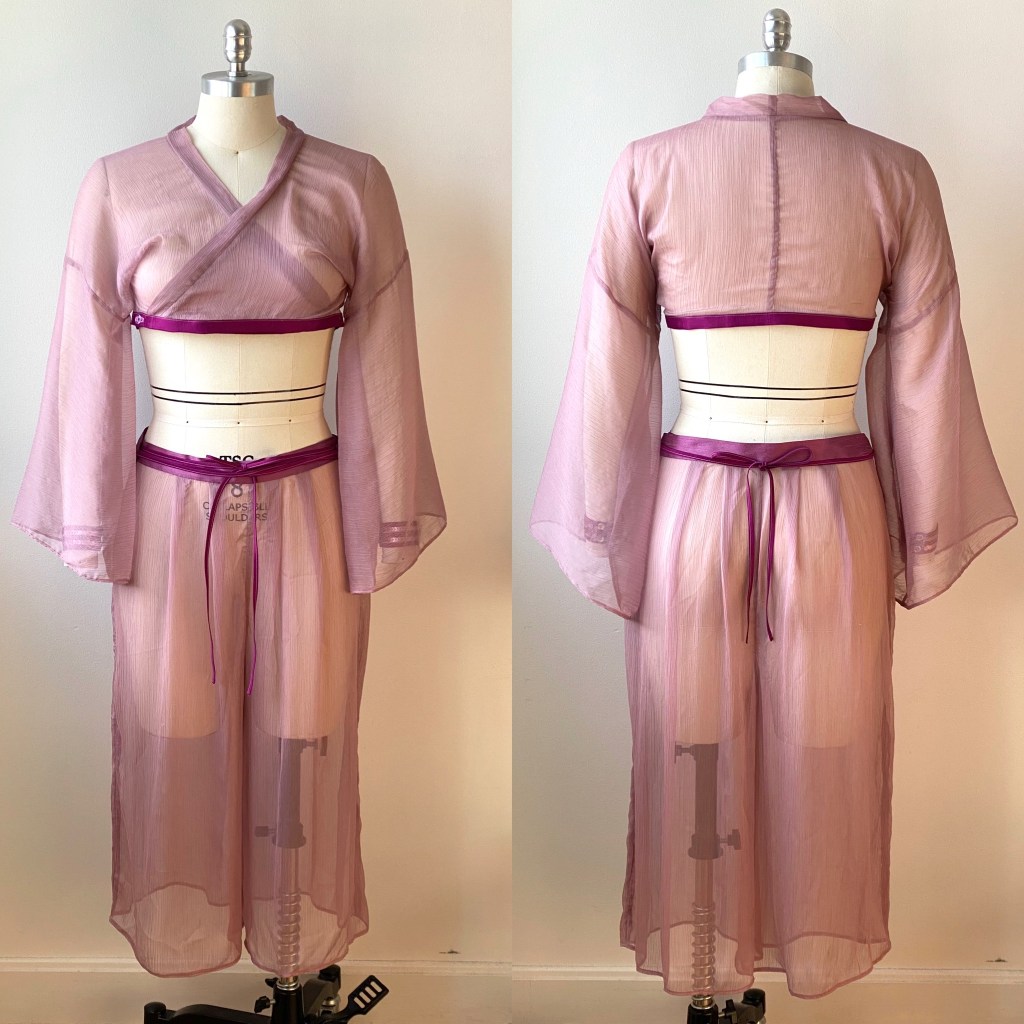
The top pattern was drafted based on a Chinese “ru” (upper garment) tutorial by Hanfu-Asks on Tumblr, with modifications to make it cropped. The pants pattern was drafted based on Simplicity 5124, modified to include pleats, a waist band, and a closed seam along most of the outer leg. Mockups were created and the final clothing pieces were sewn from crinkled chiffon.
Headpiece
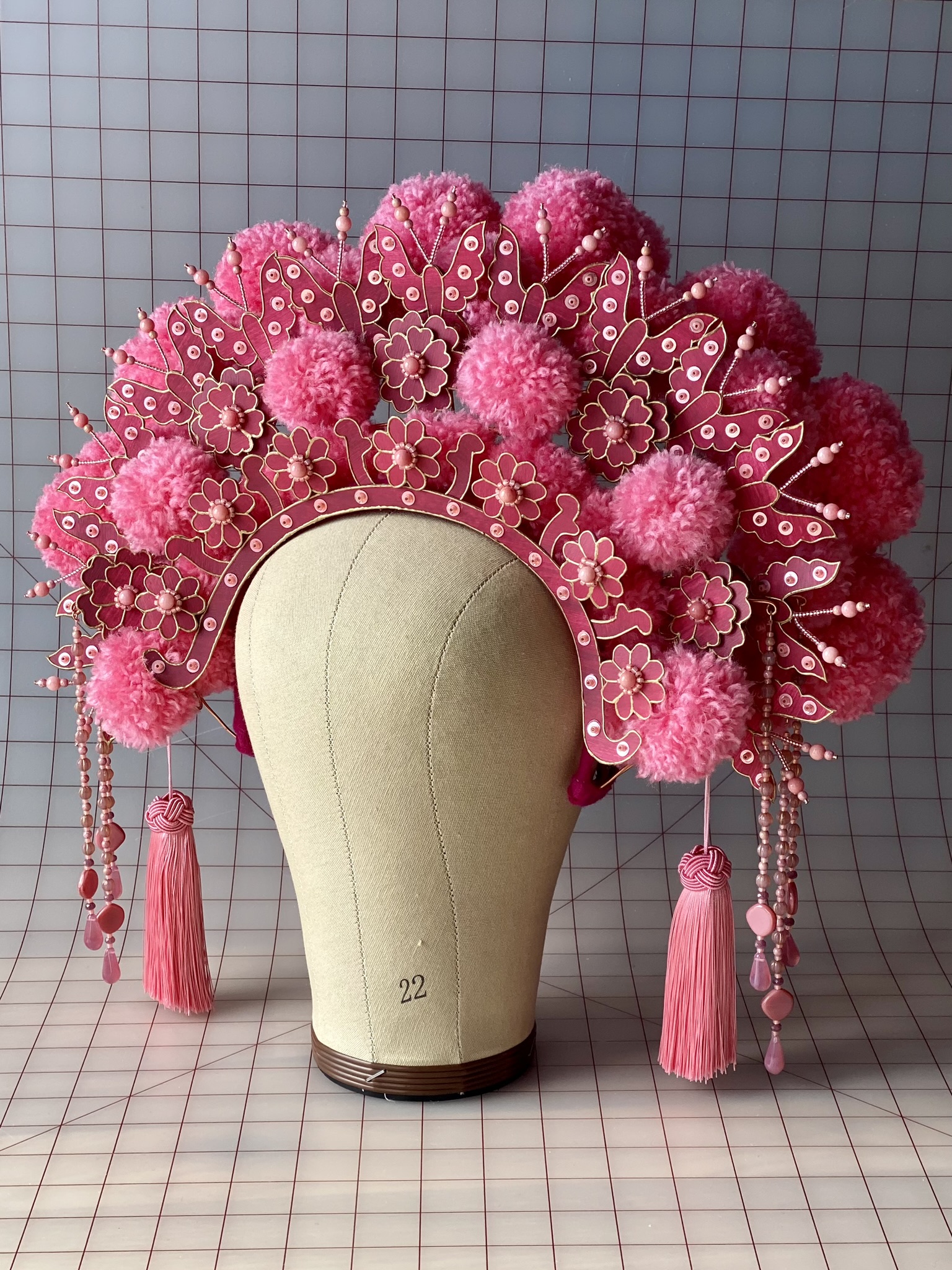
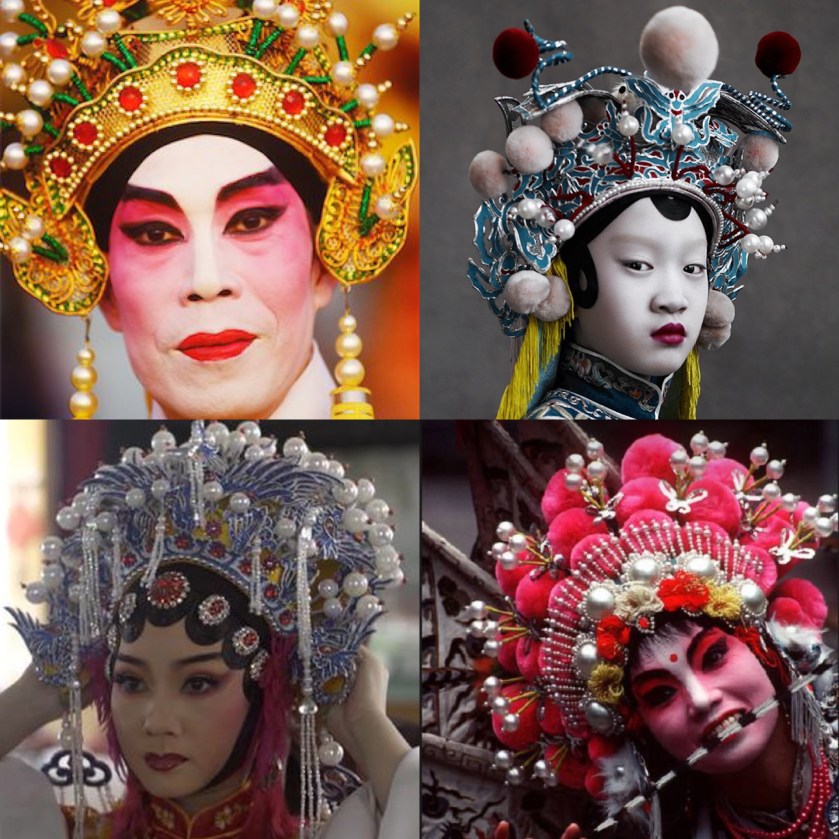
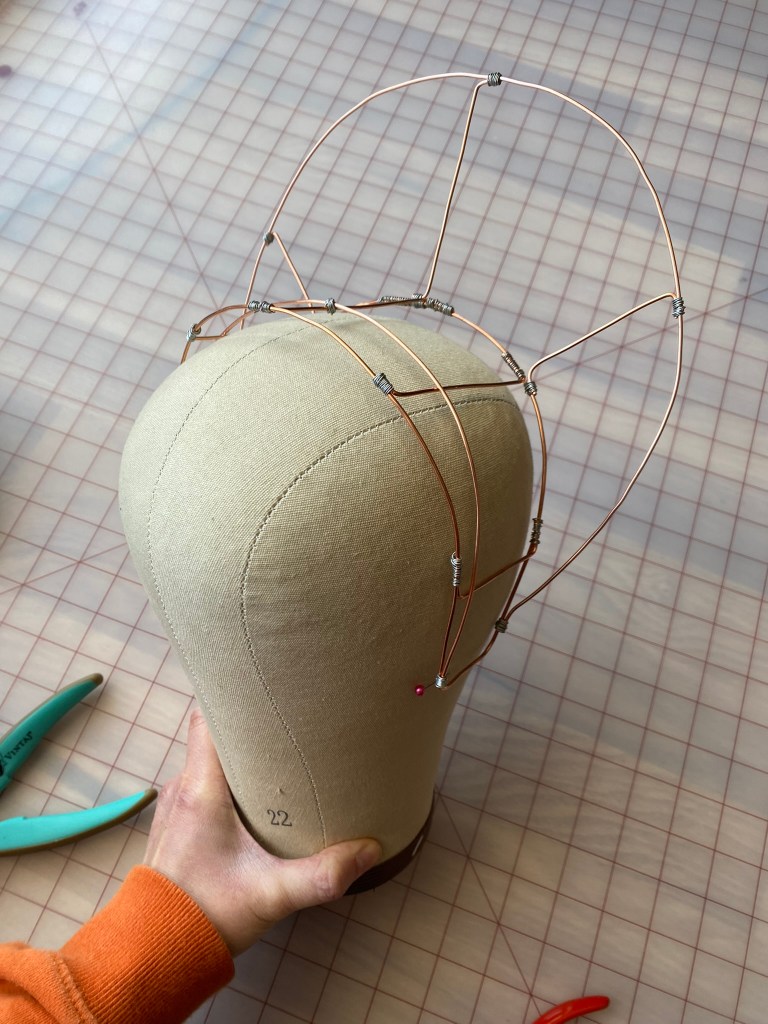
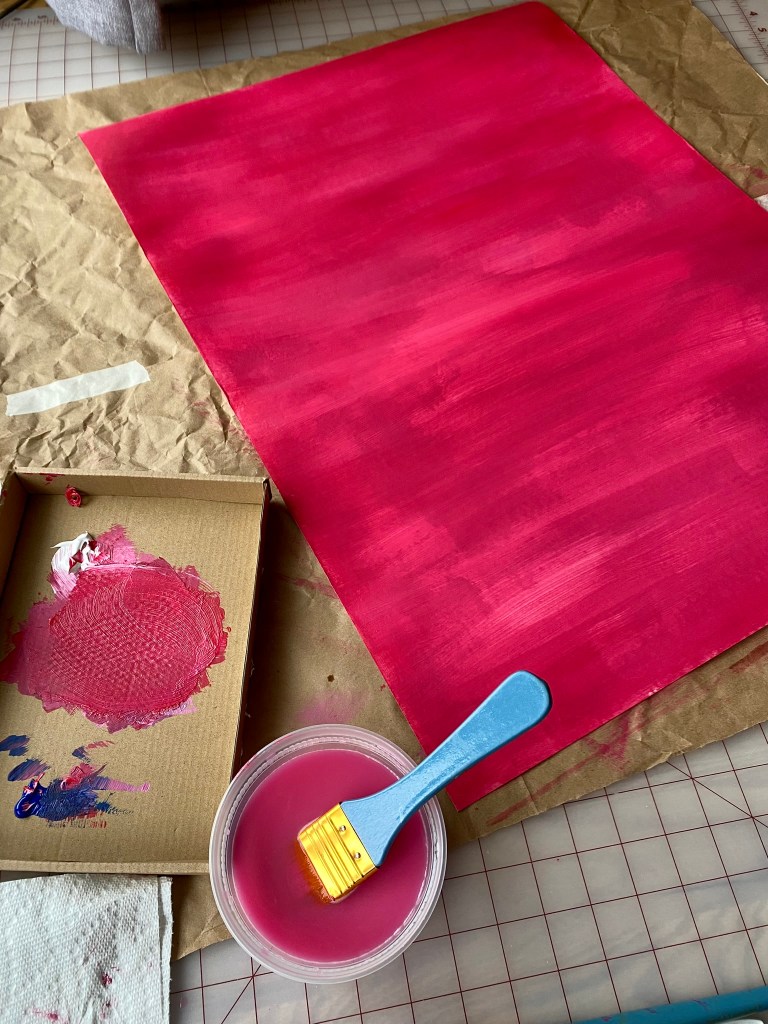
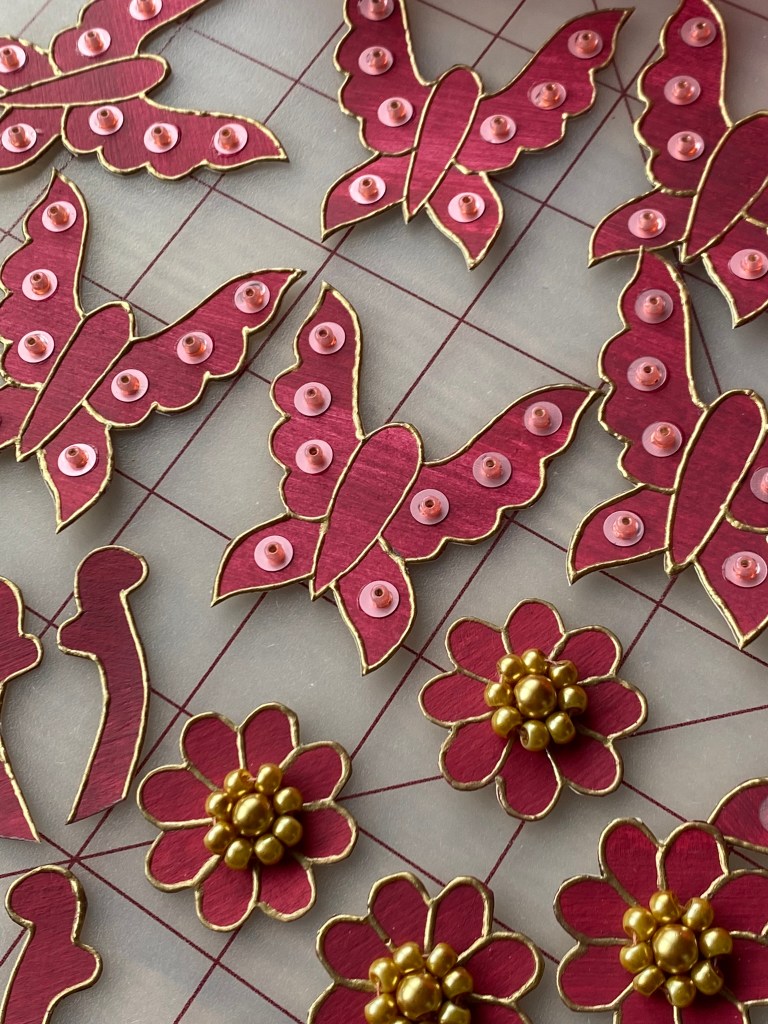
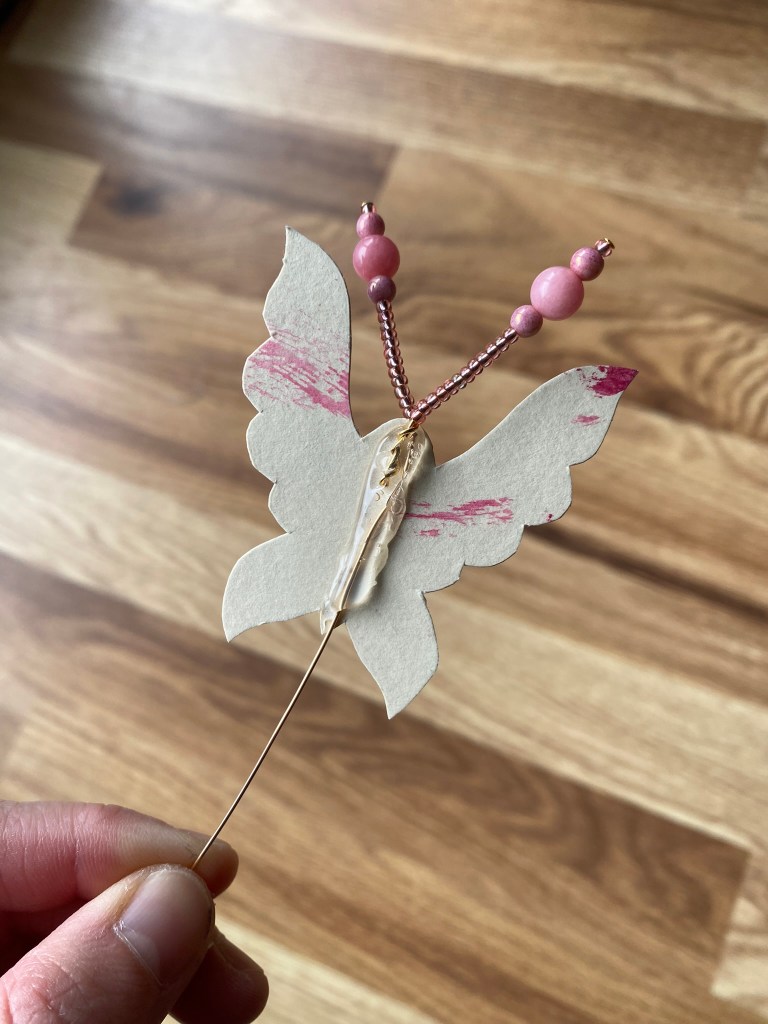
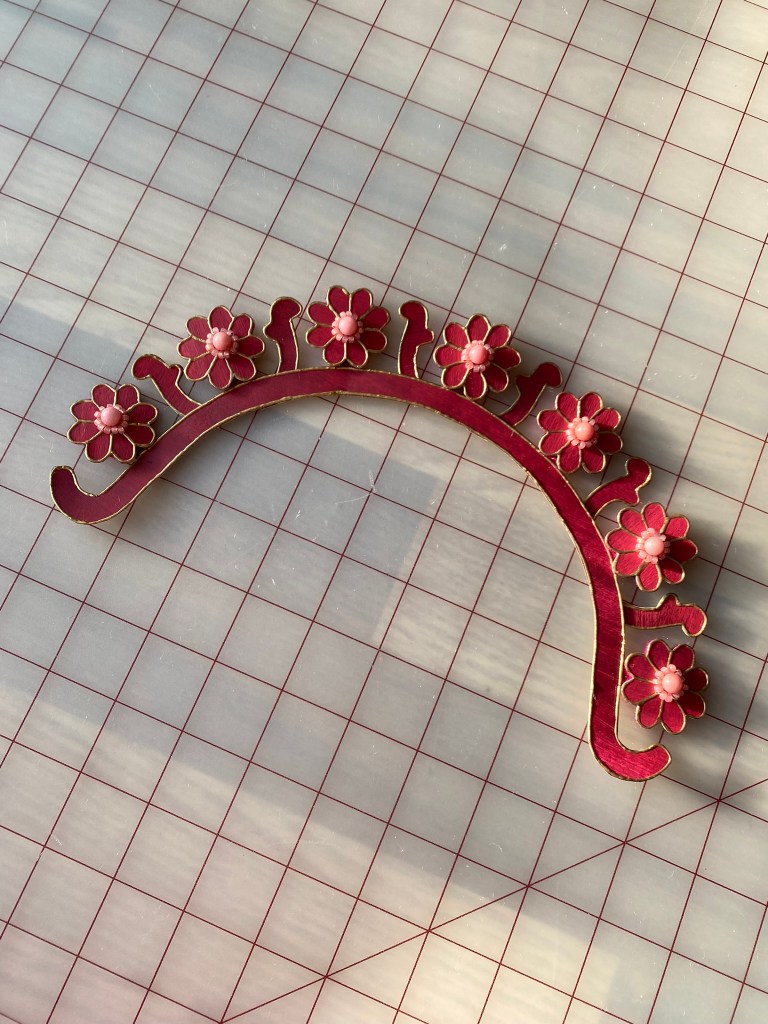
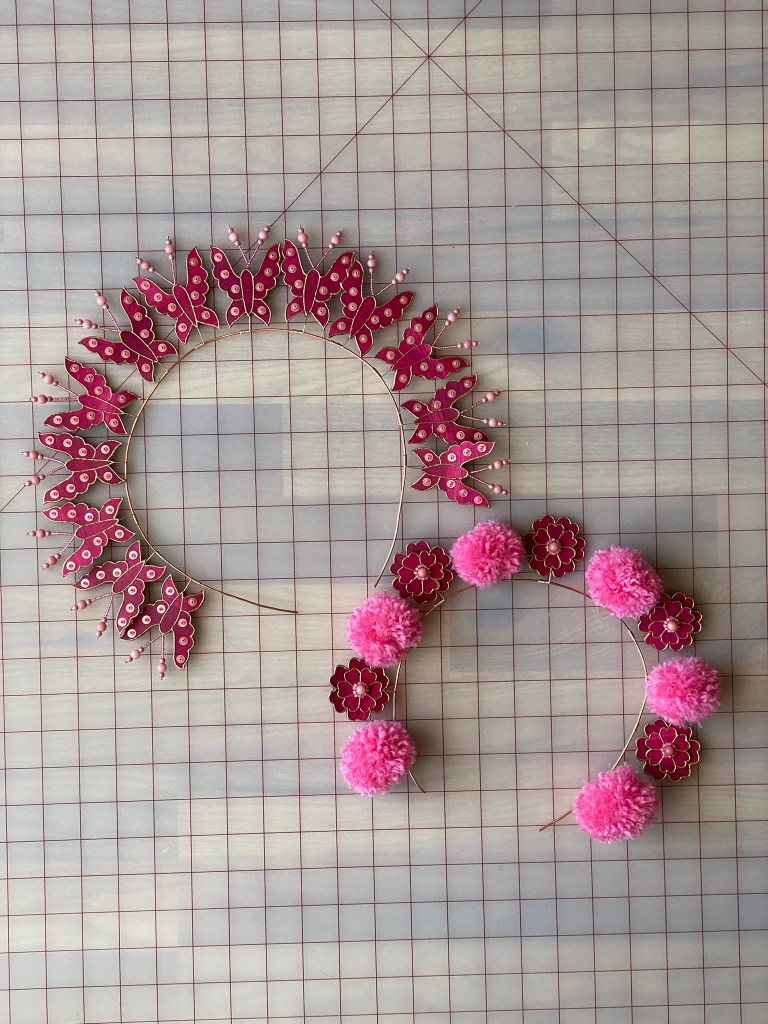
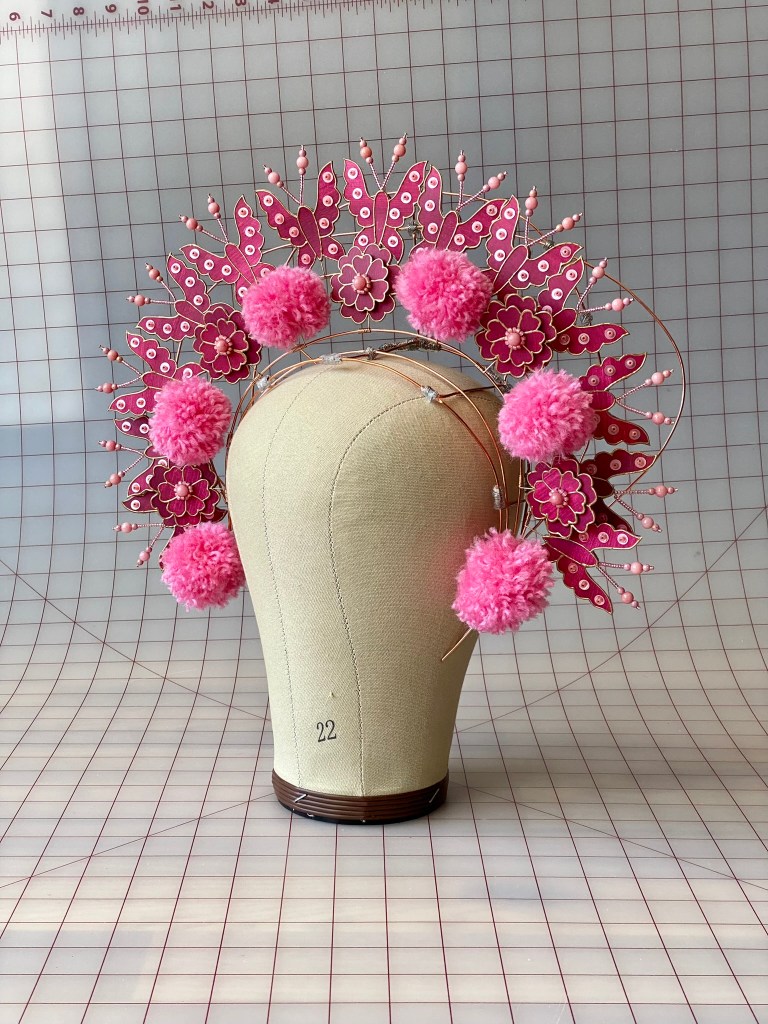
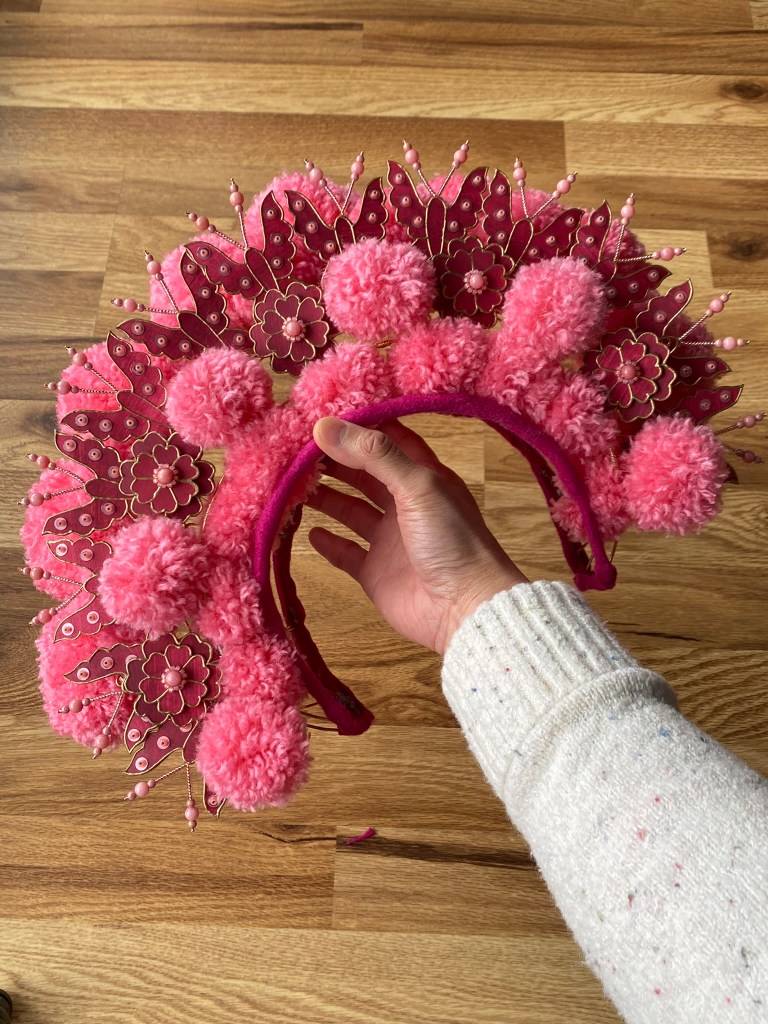
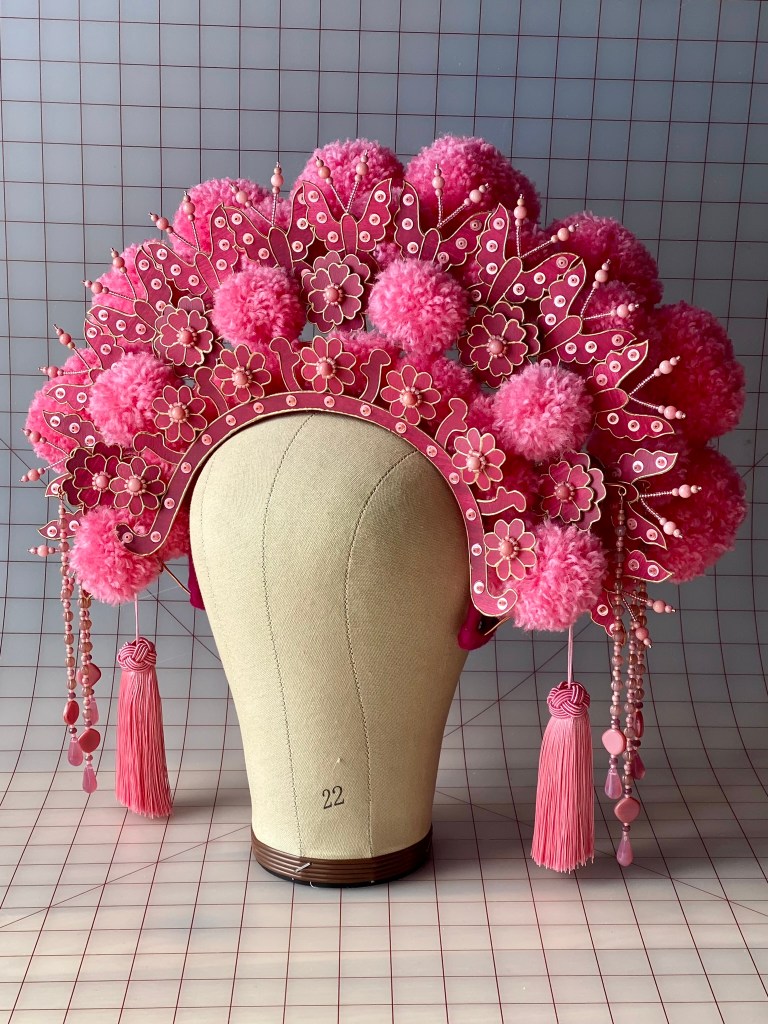
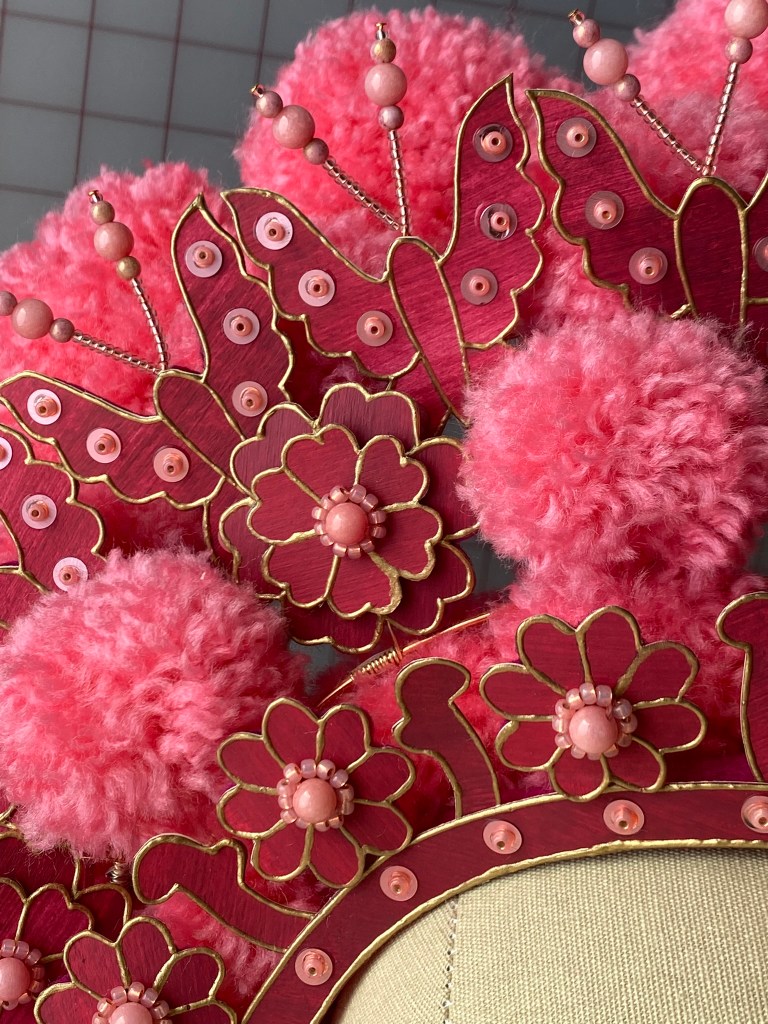
The headpiece is designed after Chinese opera headdresses called “kuitou”, which are often characterized by their floral and butterfly filigree, pom poms, and beads. This piece was made based on YouTube tutorials by Yanhong Aimee, who focuses on recreating Chinese historical headpieces. To create this piece, a headband-shaped frame was created using 16 gauge craft wire, with the ends connected using a thinner wire and hot glue. Filigree flowers and butterflies were cut out of a painted poster board, outlined in gold puffy paint, and decorated with beads and sequins. Pink pom poms were created from yarn. The filigree pieces and pom poms were attached to curved wires to create layers, which were then secured to the wire base. Dangling beads and tassels were attached towards the sides and bottom of the headpiece.
Other Accessories
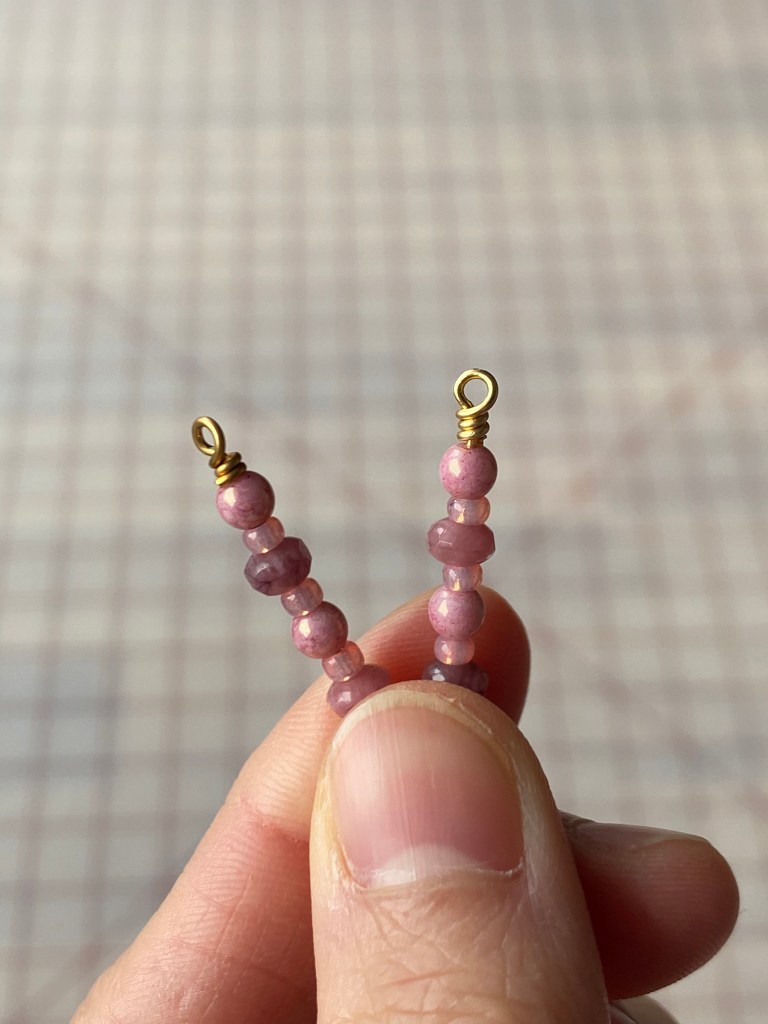
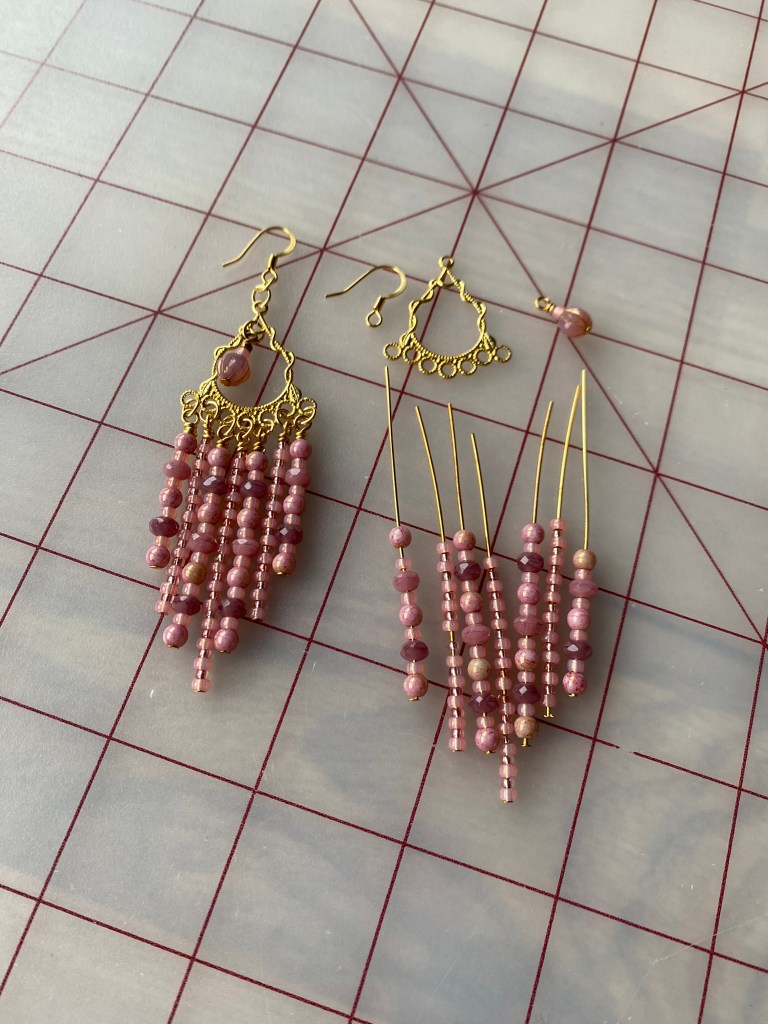
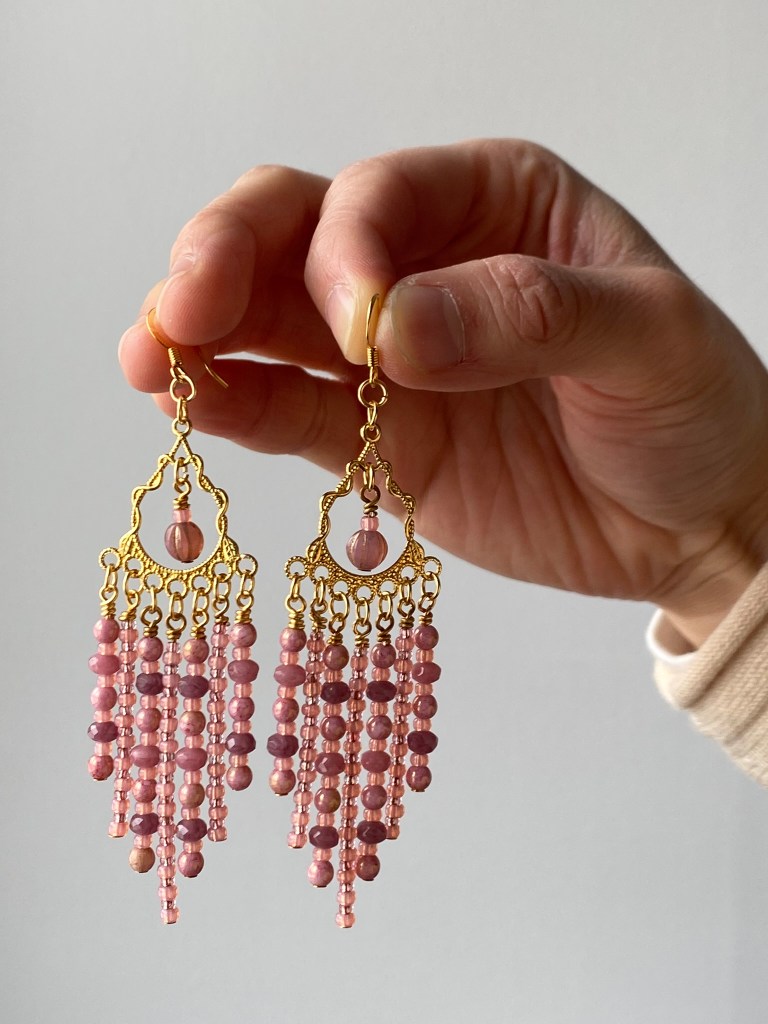
Dangling earrings were made by creating stacks of glass beads on headpins that were then attached to an earring base using jump rings.
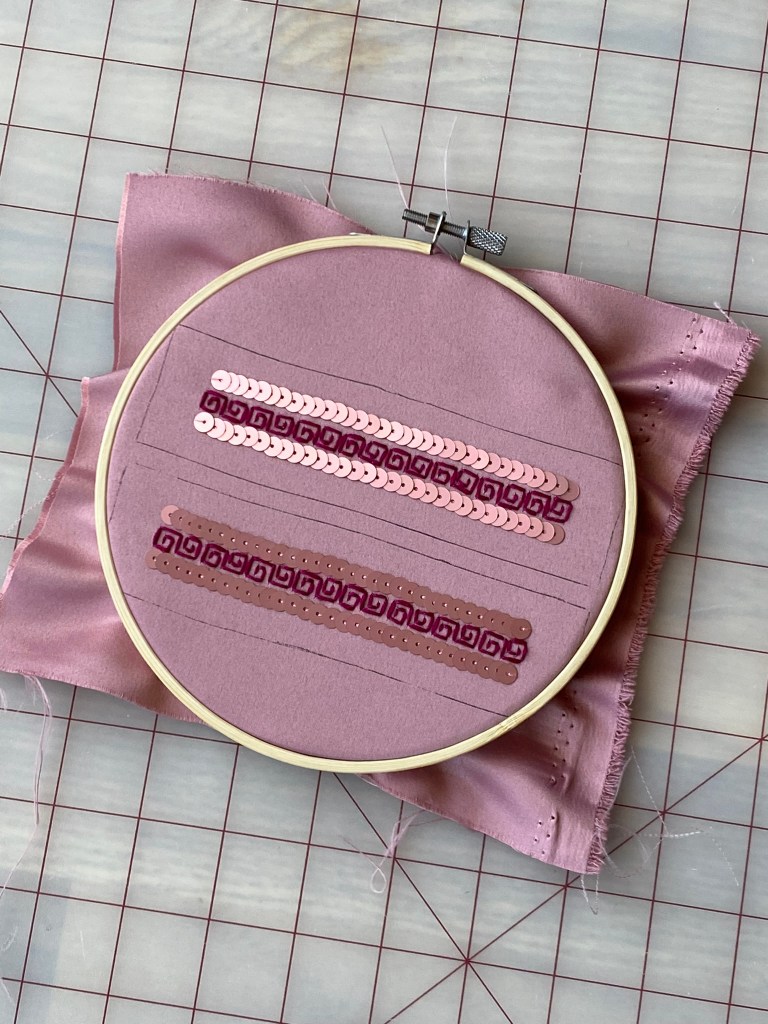
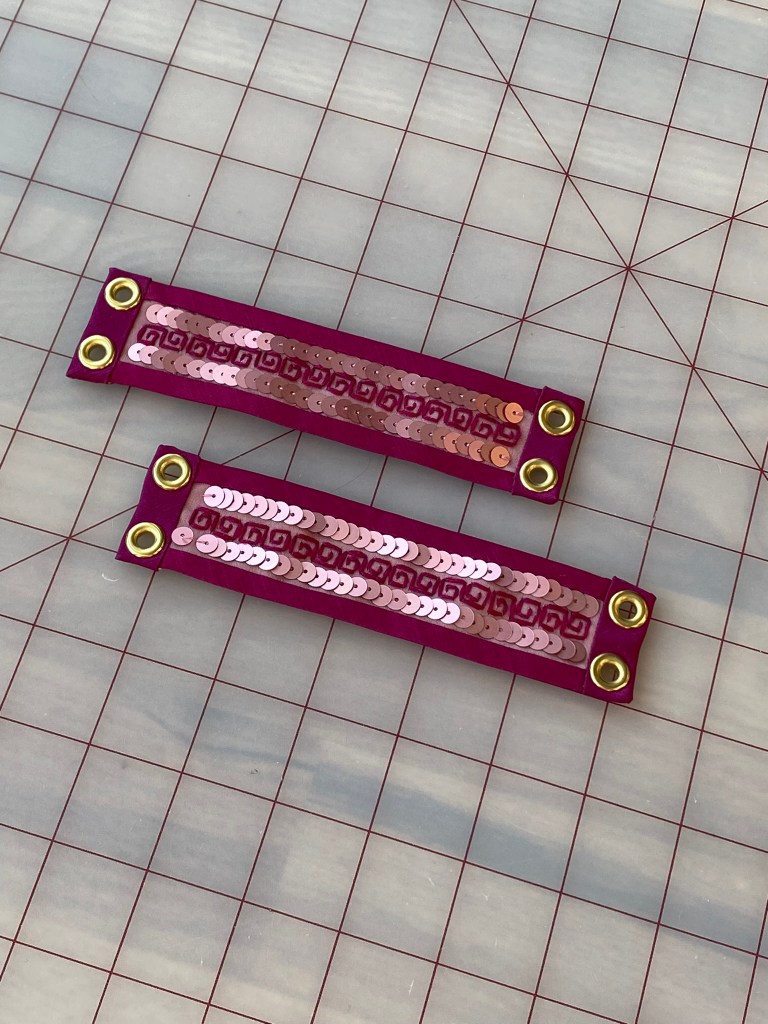
To create wristbands, strips of satin were embroidered and sewn with sequins. Bias binding was sewn on the edges and grommets were added for closure.
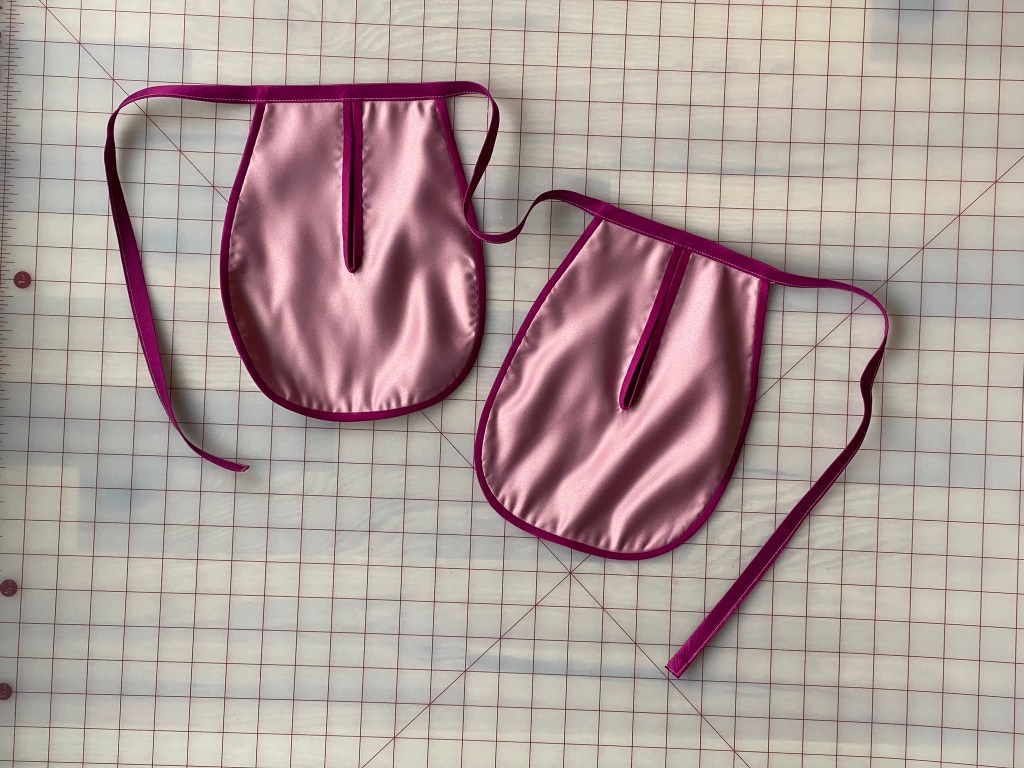
Tie-on pockets were self-drafted and cut from satin. Bias binding was sewn along the openings and around each pocket. A waistband/tie was sewn along the top edge.
Thoughts
My vision for this cosplay was to create a version of Ty Lee that highlights her identity as a performer by designing a costume that takes inspiration from the elegant and maximalist costumes of Chinese performing arts such as Chinese opera. Not only are these costumes teeming with color and texture, but they’re also full of meaning and convey information about the characters portrayed by the performers. I wanted to pay homage to these costumes and draw connections to one of the many cultures that the Avatar series pulls inspiration from.
I’m most proud of the hand embroidery featured in the collar and skirt. Many of the designs take direct inspiration from antique embroidery pieces, primarily within the collections of the MFA Boston and the Met. Though I could never come close in skill to the countless unnamed artists who meticulously hand crafted these beautiful pieces, I hoped to learn from and appreciate them by reproducing their work in a modern context.
Cosplay Embroidery vs. Historical References
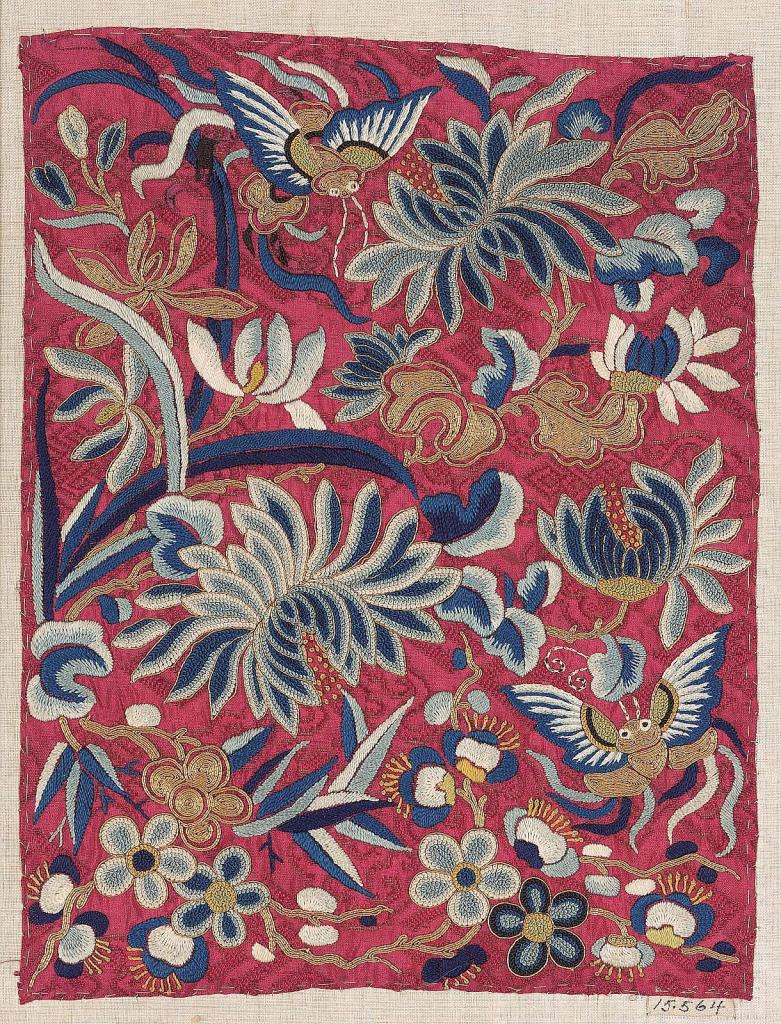
Embroidery Details
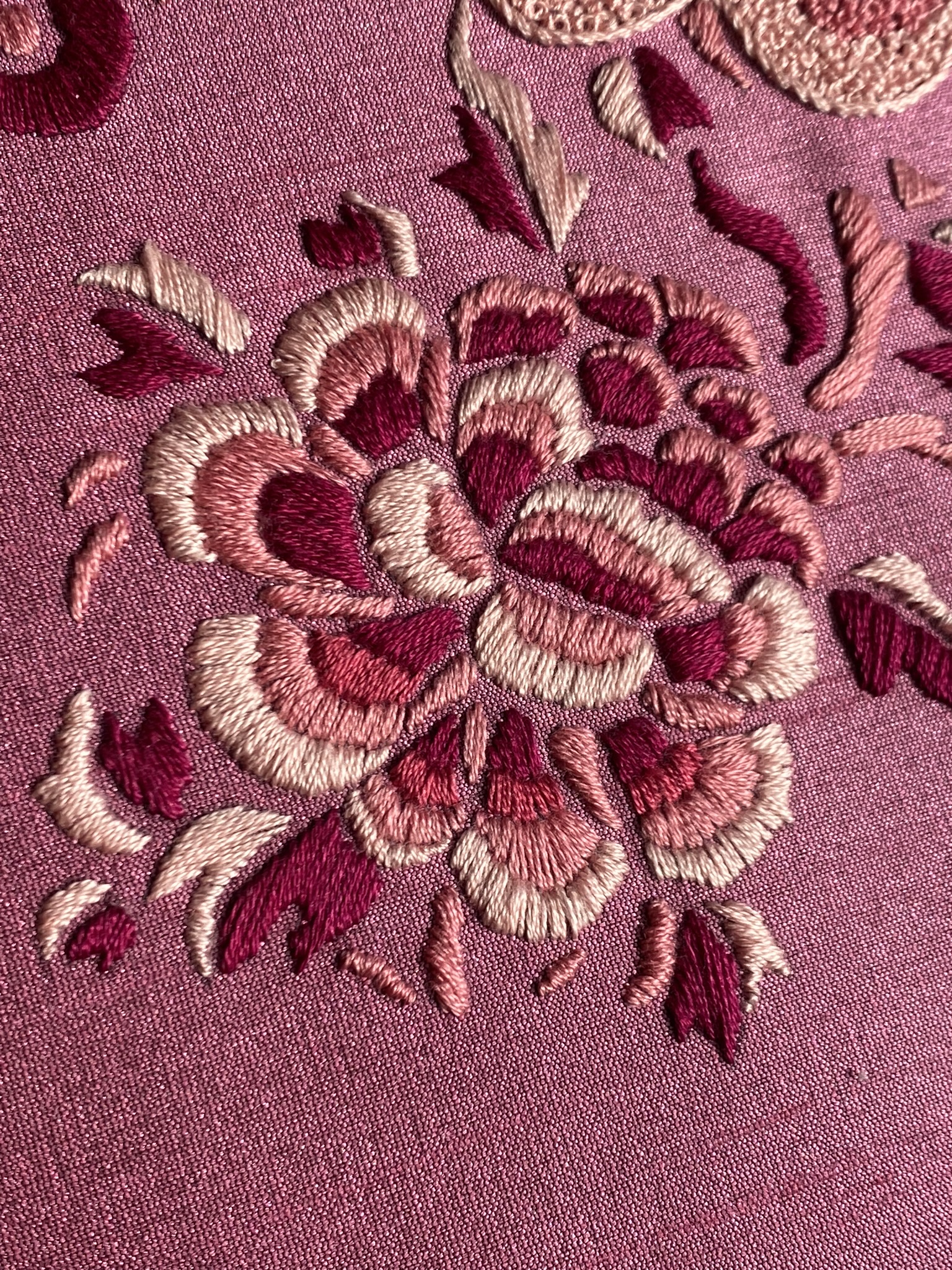
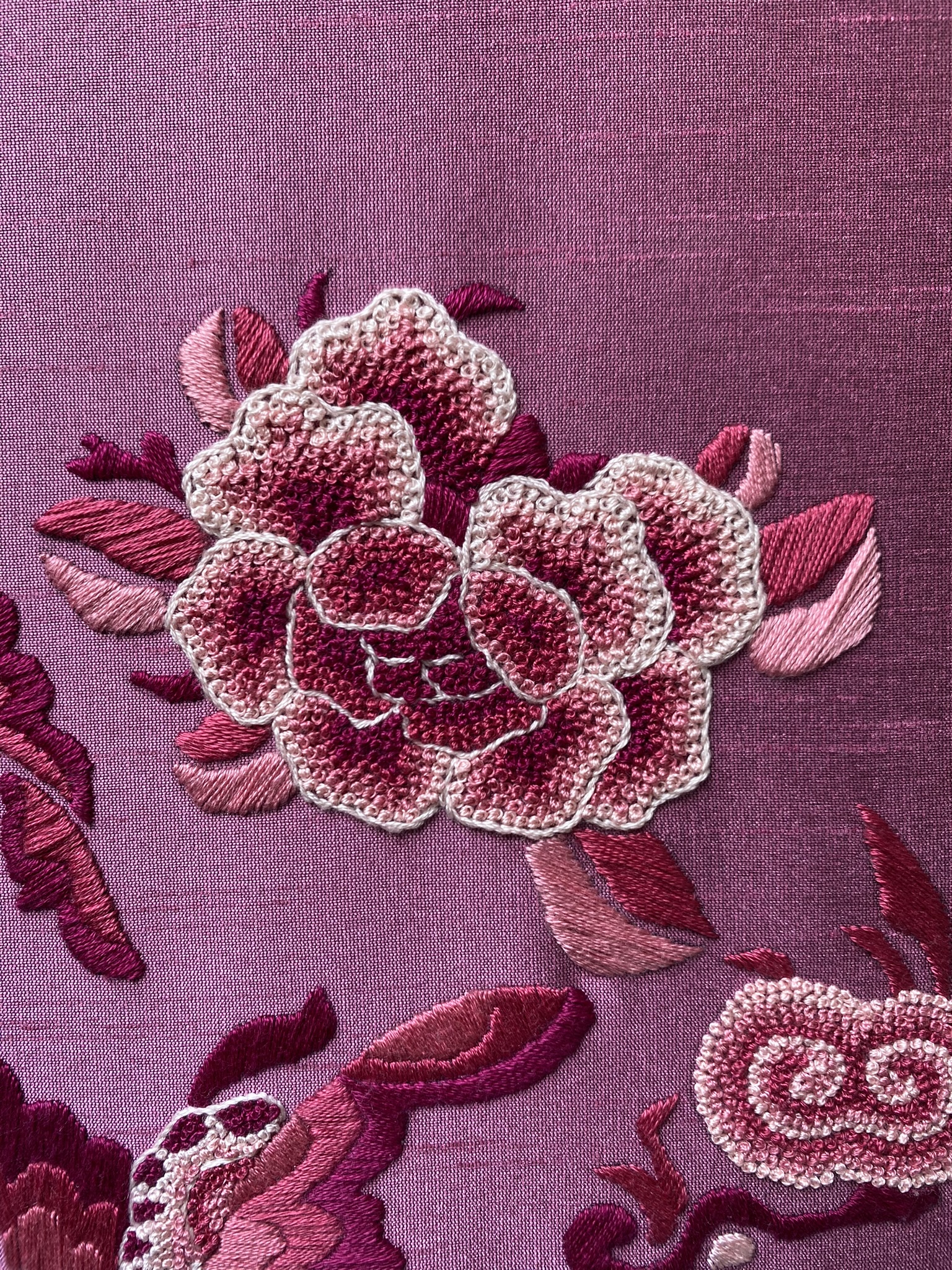
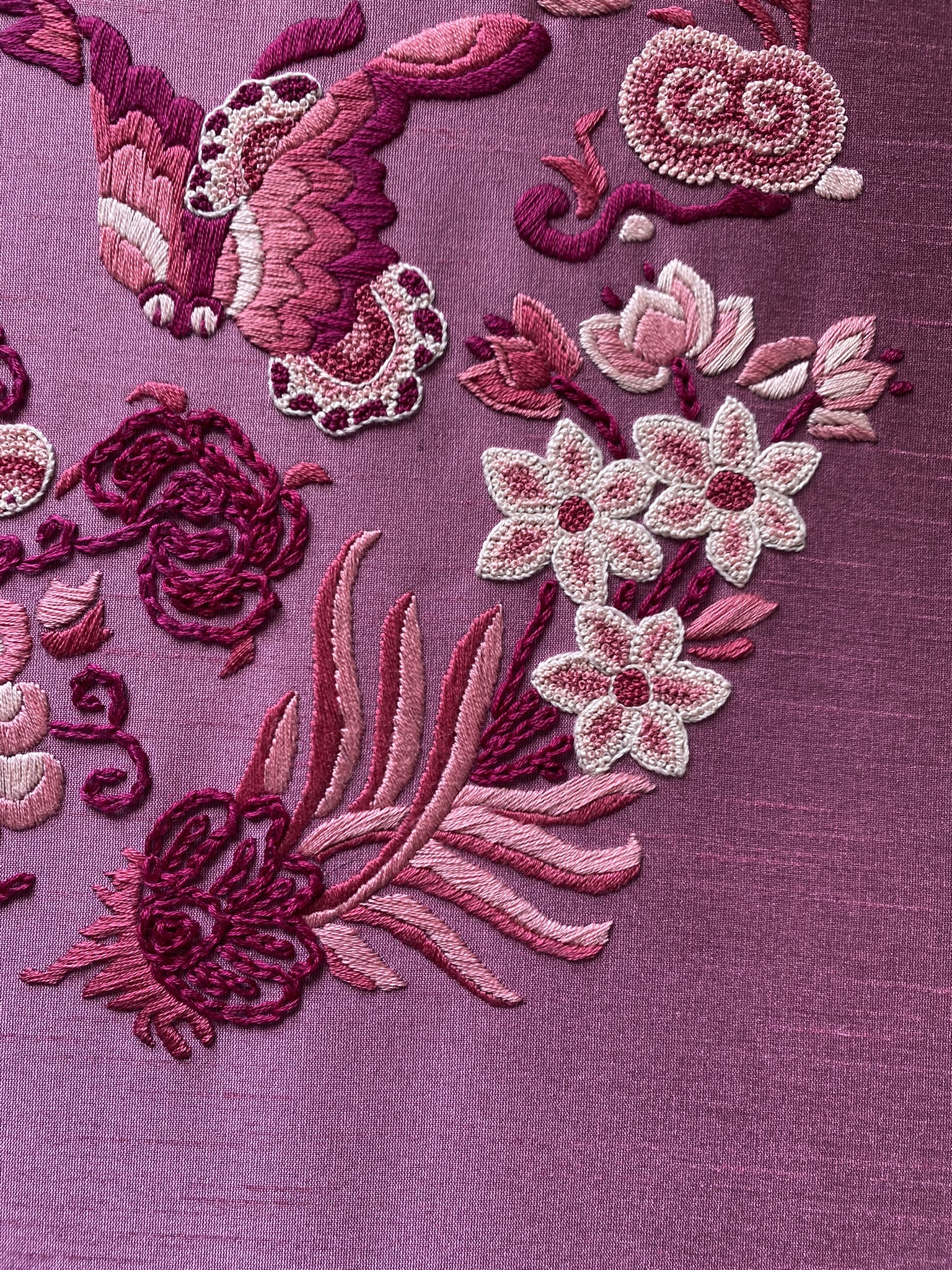
 ARINICO COSPLAY